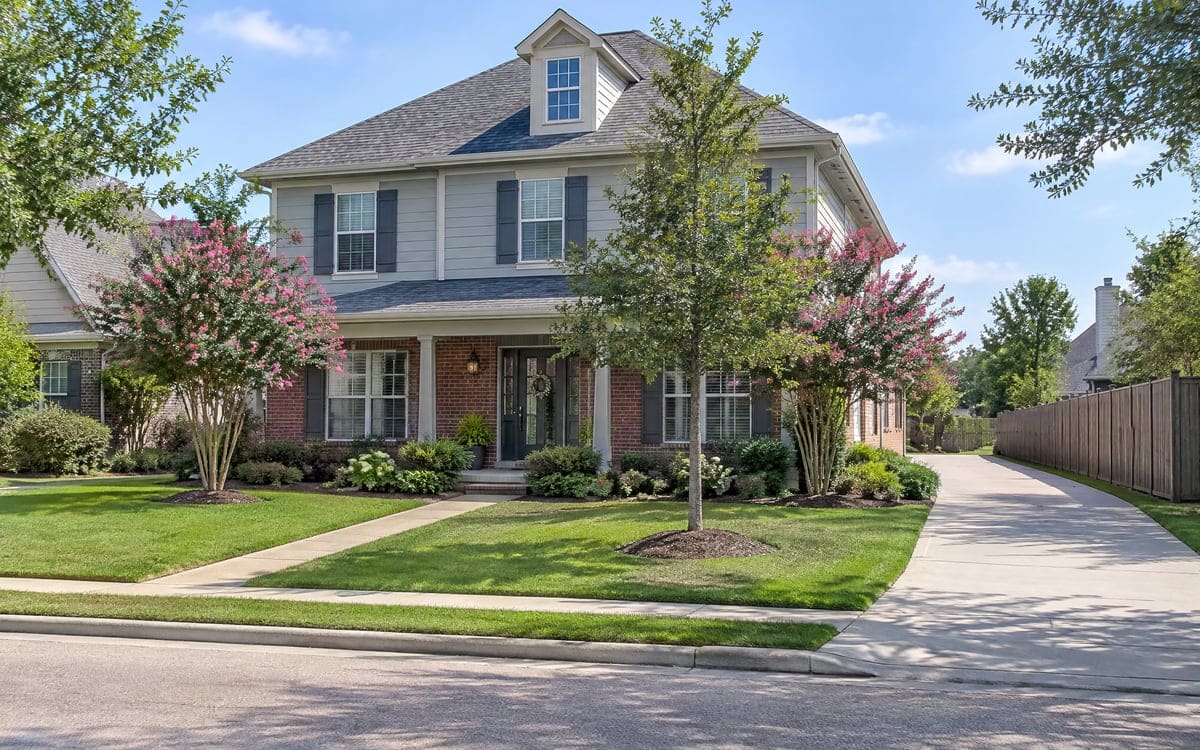
Baton Rouge, Louisiana pressure washing
Pressure washing in Baton Rouge for houses, roofs and driveways
Pressure washing in Baton Rouge gets called about one surface at a time: the shady side of the house where siding has gone soft green, a driveway that has turned gray in blotches, a roof streaked dark, a deck graying before the first party of the season. Each gets its own method.
What needs washing right now
Green film on the shady side of the house
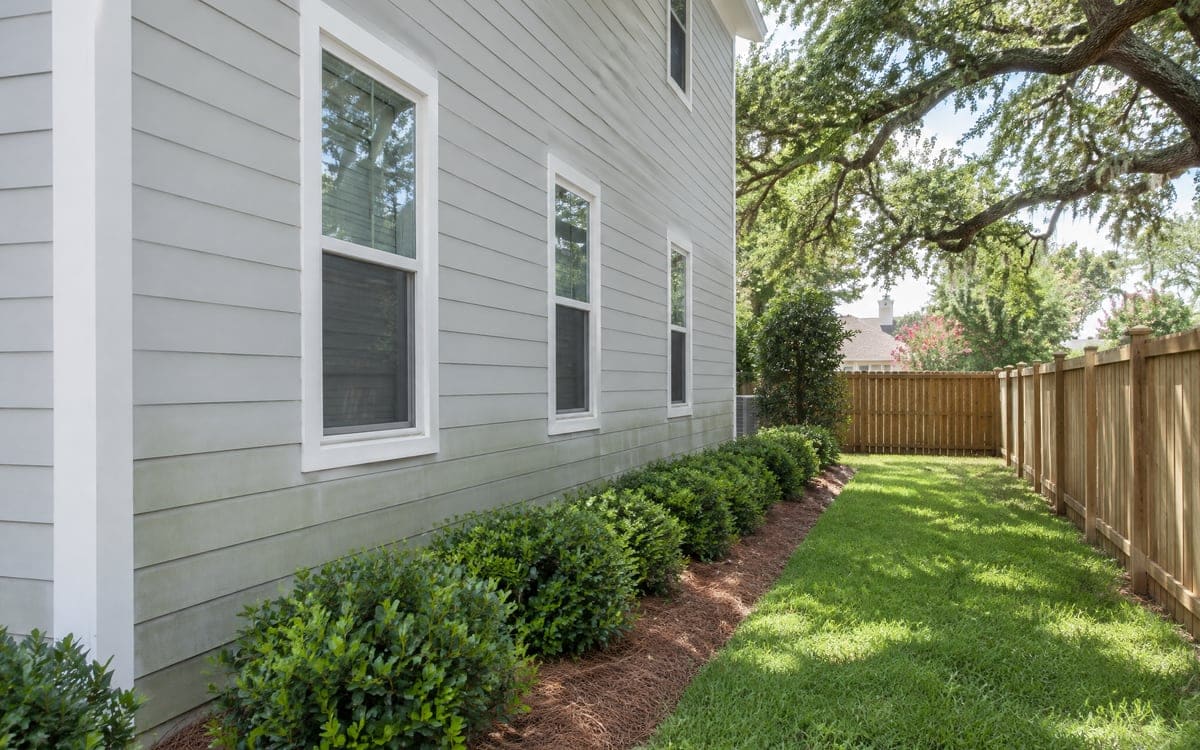
Vinyl, stucco and painted wood on the shady side of a house pick up a soft green film in a warm, damp climate. The siding is not stained the way concrete gets stained; the color is sitting on top of it, and a low-pressure wash takes it off. A full house wash covers all four walls, the trim, the soffits, and the gutter fronts.
Dark streaks running down the roof
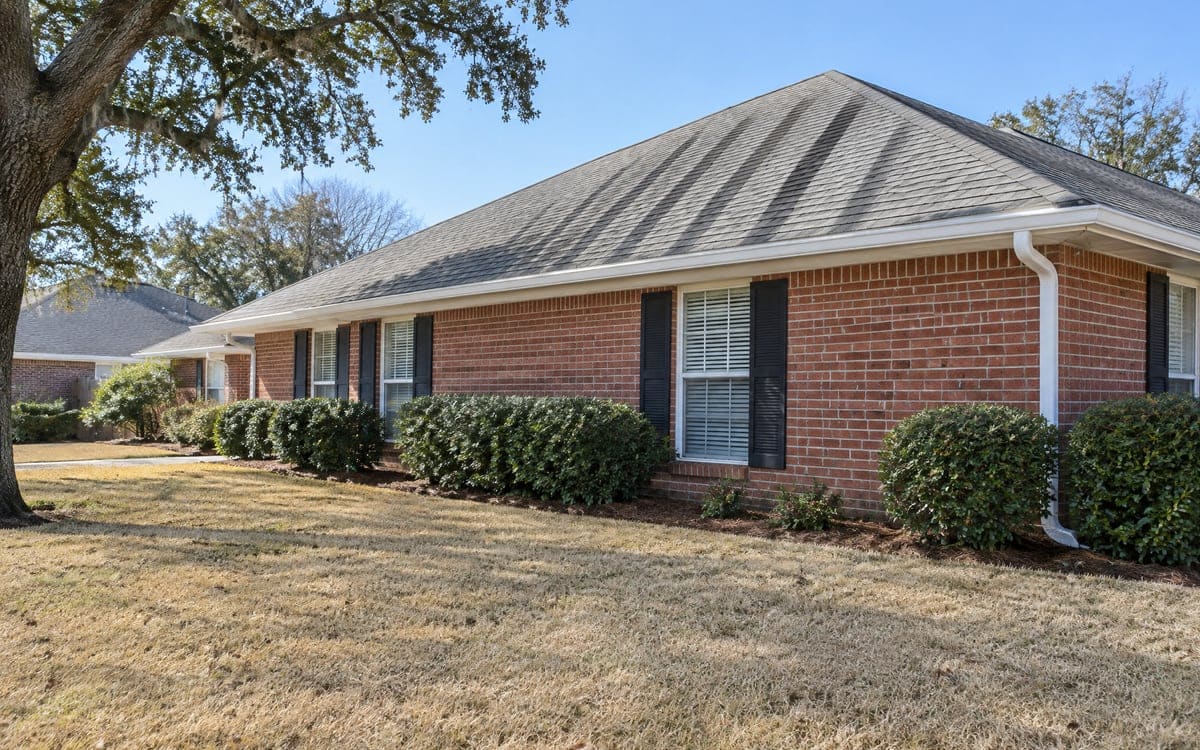
Those long dark streaks running down a roof are usually algae growth on the shingles. Streaks on the roof get cleaned from the ground at low pressure. Nobody on our crew gets up on the shingles, and the method is a rinse rather than a high-pressure spray.
A driveway gone gray and blotchy
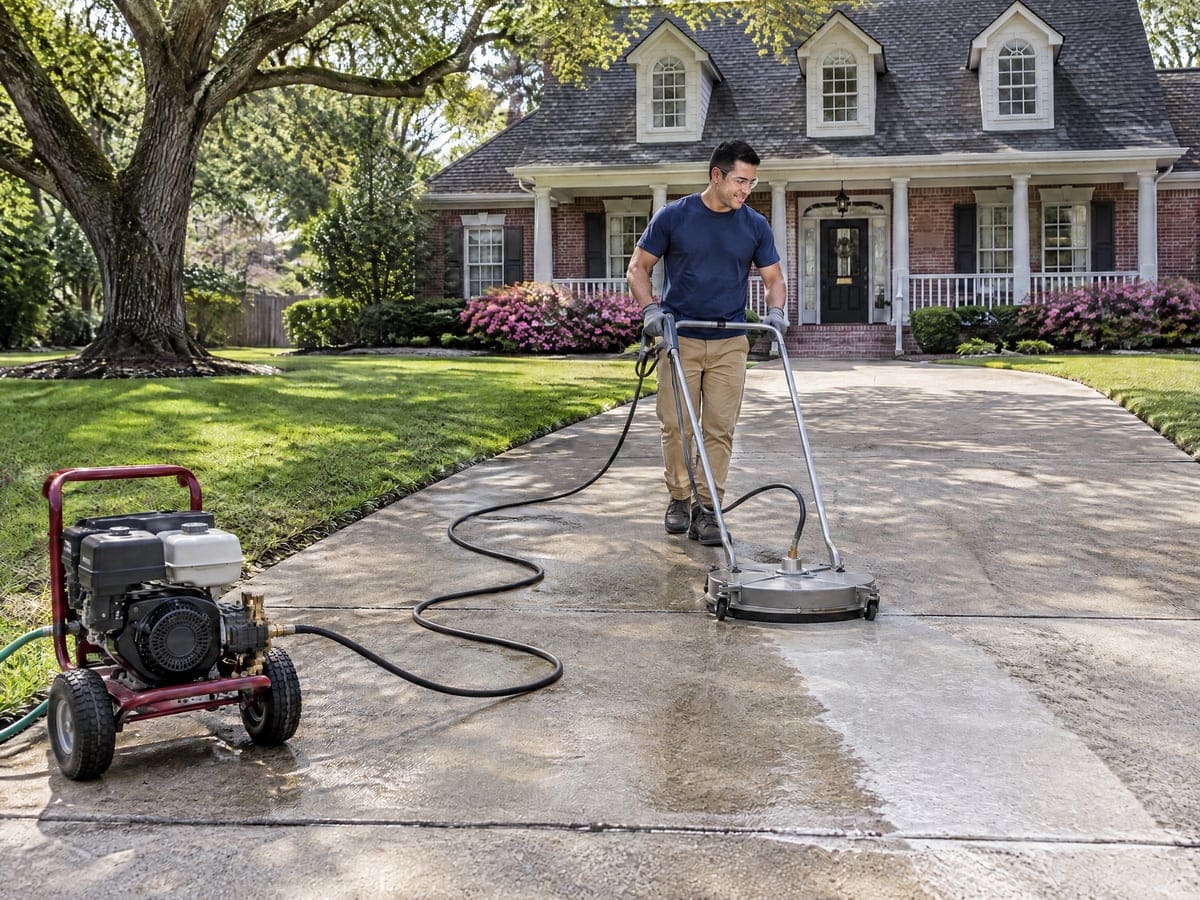
Flat concrete can look gray on one half, green along the edges, and lighter where the car sits. Driveway and patio washing opens the surface back up, in even overlapping passes so it dries one color.
A deck that needs to look right before people come over
Wood deck boards gray out from the sun and spot from leaves and planters. The deck and the fence get washed at the pressure the wood takes. A wash is not a stain job, so we tell you if the wood would do better with a painter.
Vinyl or stucco that needs a gentler wash
The low-pressure method handles siding, stucco, old paint and shingle roofs, green film and all. The dirt and film come off with the rinse rather than the pressure.
A house going on the market
The outside is what buyers see first. Walks, porch, siding, gutters and the drive get looked at before the walls inside the door. Every surface we wash can go on the same list, so the outside is ready for photos and showings.
Humid mornings, heavy rain and 1970s houses
Baton Rouge's average morning relative humidity is 89 percent, and August mornings run around 93 percent. The airport averages 61.94 inches of rain a year under the 1991 to 2020 normals. A lot of the city's walls are older than people guess: the median home was built in 1976, and about 58 percent of housing units were built before 1980.
Mold and mildew thrive in warm, damp, humid conditions. Older brick, trim and paint take a light hand, and the wash is set to that.
Most Baton Rouge homes predate 1980, with the biggest share of them going up in the 1970s.
Peeling paint goes to a painter rather than under a spray. Brick gets washed by the state of its mortar. On a house with chalk or loose paint, we point that out before any work starts.
Pressure washing services, by the surface
Each surface on a Baton Rouge house wants its own method and its own page. Walls, roof, drive, deck and fence each have their own.
Siding and roofs
Driveways, walks and patios
Decks and fences
When you call us about the house
- You tell us what needs washing: the surfaces and what they are made of, one story or two, the roof, plants and pets, the yard gate and the outside spigot, and what has been bothering you most about how the place looks.
- We come look at it with you, outside, so the price is set from what the house actually is instead of a square footage number over the phone.
- You get the price and decide. Nothing starts until you say yes.
- The wash gets done, then a last look together at the walls, the beds below, the windows and the ground.
What happens when you call goes through the same steps in a little more detail.
Soft washing or pressure washing
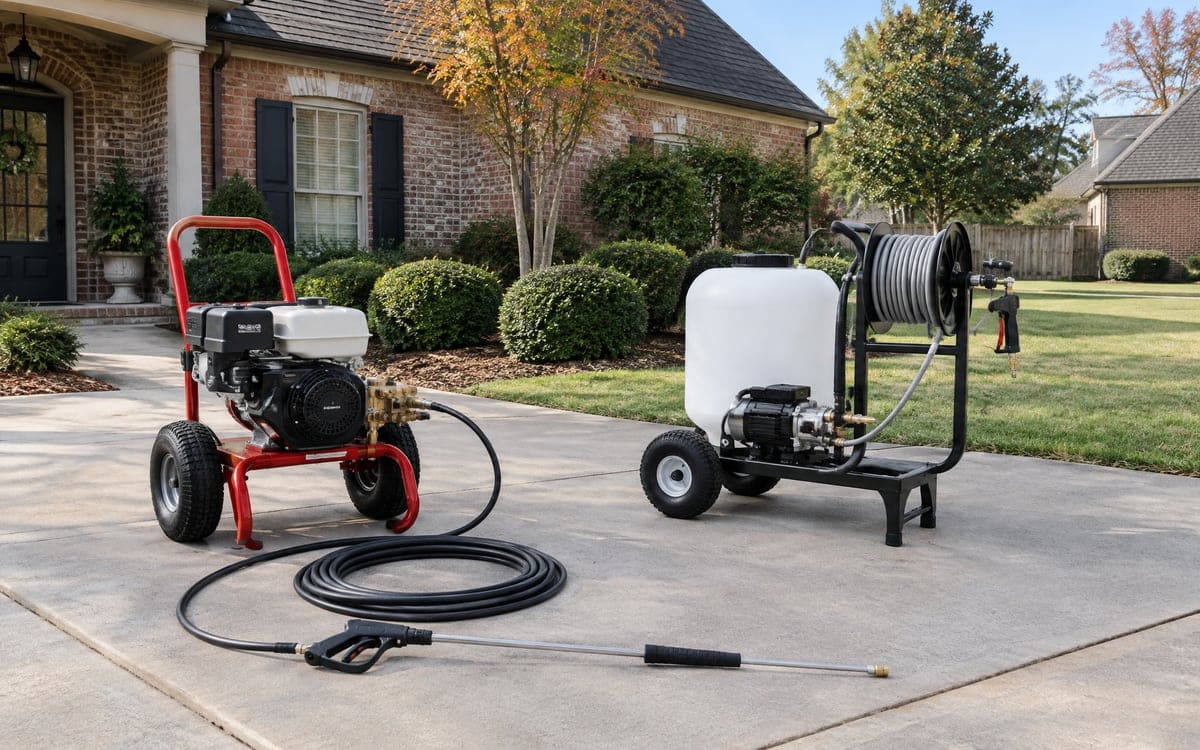
Siding, stucco, painted wood and shingle roofs take low pressure. Concrete, brick walks and most pavers take more. "Pressure washing" and "power washing" are usually the same job, picked by surface rather than by name. If you are not sure which method your house needs, soft washing or pressure washing walks through it surface by surface.
Detached houses, and a city where about half of households rent
Single-family detached houses make up about 55 percent of the city's housing, which is a lot of walls, yards and driveways. The city is also split roughly in half on tenure, so both sides end up on the phone: an owner looking at a tired drive and a landlord getting a rental ready between tenants.
Renters live in about 52 percent and owners in about 48 percent of Baton Rouge's 88,205 occupied homes. Who arranges and pays for a wash is between the landlord and the tenant. We get back to whichever one calls, and the other can be looped in before anything is agreed.
Pressure washing in Baton Rouge: your questions
What does a pressure wash cost, and why not a number on the phone?
The price depends on what the house is made of, how high the walls go, how much the roof shows from the ground, the shape of the drive and whether the walks and gutter fronts are on the list. A number over the phone picks a number out of the air. What goes into a price runs through the drivers.
Soft washing or pressure washing: which does my house need?
A siding wall, a stucco wall or a shingle roof takes the low-pressure method. Concrete and brick drives take more pressure. The guide on which method each surface wants spells out which goes where.
What is the green or black growth on my siding and roof?
The green film on siding is mildew, a fungus that thrives in warm, damp, humid conditions. The dark streaks on a roof are usually algae growth; what those roof streaks are gets into them in more detail.
Do I need to be home, and what about the outside water?
Tell us when you call whether you plan to be home; some owners like to walk the yard with us at the start, and others leave a gate open and go about their day. Tell us about the outside spigot too, so we know where the water comes from on the day of the wash. The gate, the dog, open windows and the AC unit are the main things we go over before the wash.
What should I move or cover before the wash?
Patio furniture, cushions, grills, cars and anything on the ground near the walls we are washing. Hanging baskets, open window screens and loose weatherstripping are worth a look. The crew moves what it can and covers outlets, light fixtures, meters, panels and the AC unit.
Do you wash roofs and second stories?
Yes. The roof is washed from the ground, at low pressure, with nobody on the shingles. Second-story siding gets washed the same way, and we walk through the method with you on the look.
Does every stain come out?
No. Some stains lift and some stay. Rust rings around a spigot, old oil that has sat in concrete for a long time, cold-tar sealer that has tracked across the drive, and heavy tire marks are case by case. We look at the surface first and tell you what we expect to lift.
A walk around the house
Walk the shady side of the house and the back of the drive one more time with the sun behind you. Note what has gone green, where the concrete has gone blotchy, where the gutter fronts are streaked. Call (225) 635-8356 and tell us what you saw and what the house is made of, and we will come take a look with you. If the phone is not the right next step today, leave your number in the callback form below it, and we get back to you.