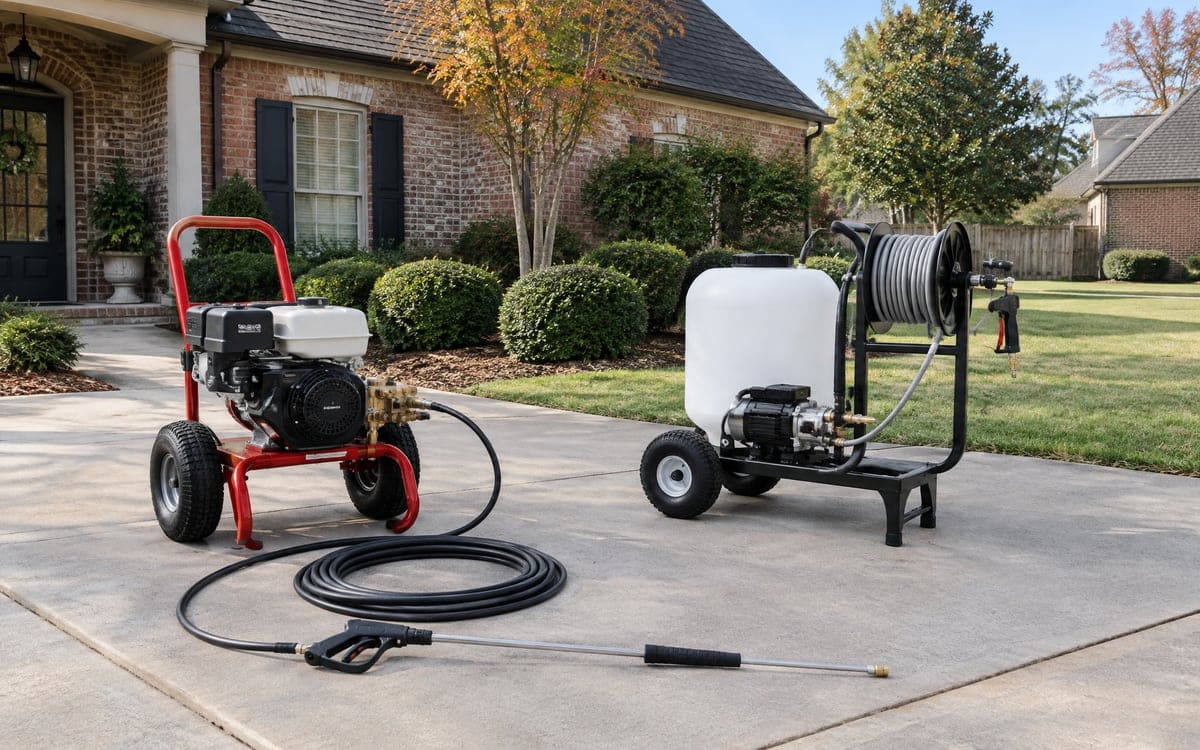
The two methods differ in pressure
A soft wash sends water at a low pressure so the surface itself does the work of letting go of the dirt without being hammered. A pressure wash runs water at higher pressure, which has the force to lift stains out of hard surfaces that can take it. Everything else about the method follows from that choice.
Which surfaces get low pressure and which get more
This is the usual split, and the crew still checks each surface before picking a method.
Low pressure
- Vinyl and fiber cement siding
- Stucco
- Painted and older wood
- Shingle roofs, washed from the ground
More pressure
- Concrete driveways, walks and patios
- Most brick pavers
| Surface | Soft wash or pressure wash | Why |
|---|---|---|
| Vinyl, aluminum and fiber cement siding | Soft wash | Takes a wide, soft spray; stronger pressure can push water behind the panels |
| Painted wood siding | Soft wash | Pressure can lift aging paint and dent the softer wood underneath |
| Stucco | Soft wash | Grit on stucco wants a careful, low-pressure rinse |
| Shingled roofs | Soft wash from the ground | Shingles do not want high pressure; the method is a low-pressure wash |
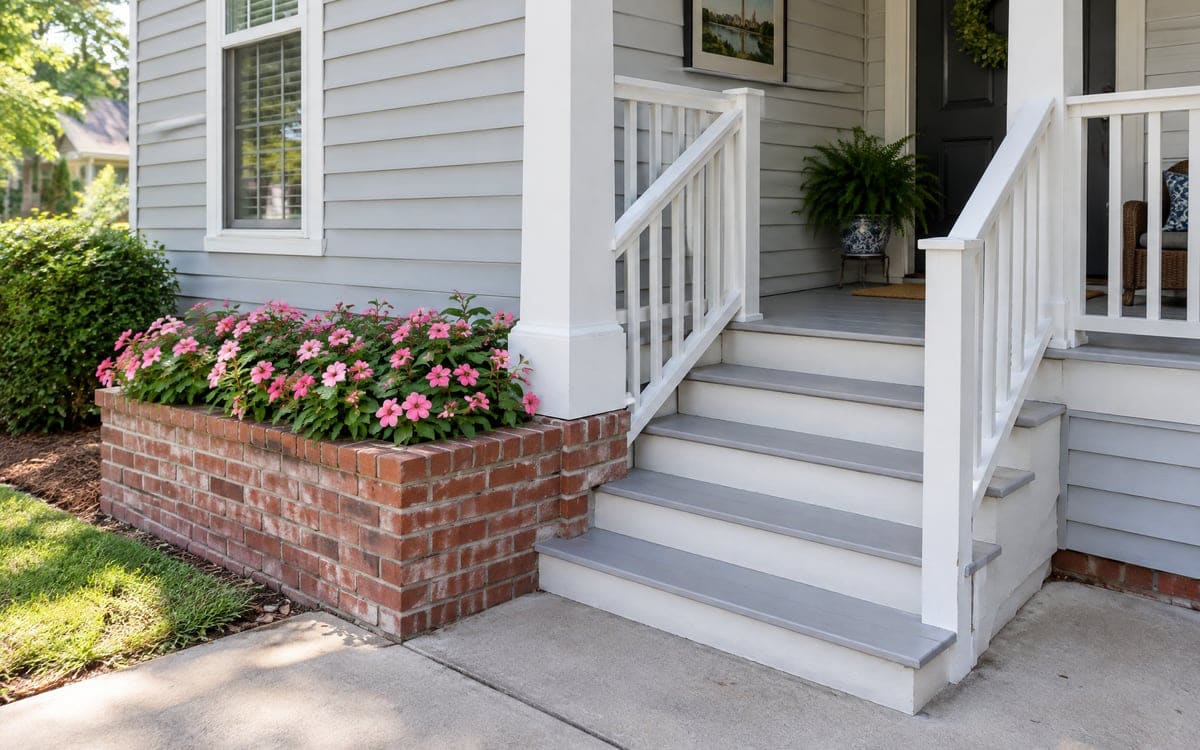
| Brick walls | Usually soft wash | Mortar joints can take damage from a tight stream held in one place |
| Concrete driveways and sidewalks | Pressure wash | Hard, flat and dense; ground-in grit comes up with more pressure |
| Concrete pavers | Pressure wash, usually | Takes more pressure but needs care at the joints |
| Composite and older wood decks | Soft to moderate | Composite scratches; old wood splinters under too much pressure |
Siding usually gets the low-pressure method
Vinyl, aluminum, fiber cement and painted wood are built to shed rain, not to be hit with a tight stream. The dirt on them sits on top: pollen, cobwebs, dust, and the faint gray-green film that builds up on the shady side after a long summer. A low-pressure soft wash gets under all of that, and the water does the rest when it rinses off.
Baton Rouge's air is humid for most of the year. The city's average relative humidity is 89 percent in the morning and 59 percent in the afternoon over the year, and August mornings average 93 percent. Mold and mildew are fungi that grow in warm, damp, humid conditions, and that pattern is hard to escape on a shaded Baton Rouge wall. A full house wash with the low-pressure method is the usual answer when the walls look dingy on one side and clean on the other.
Concrete and brick pavers take more pressure
Driveways and walks are the opposite story. Concrete is hard and dense, and the stains sit in the surface rather than on top of it. Tire marks, mildew in shade, bits of leaf litter and the dark haze that builds up near the garage all want more pressure to come up. Driveway pressure washing takes more pressure than the walls, and the drive is washed in even passes.
Brick pavers out back are a middle case. They can take more pressure than siding, but less than poured concrete, and the mortar joints between them want care so sand or mortar stays put. Edging stones and tree-root heaves tend to show up more clearly after the wash, which is useful to see even when the stones themselves are not touched.
Roofs get low pressure, from the ground
Roofs are their own job, and they get the low-pressure method. For asphalt shingle roofs, roofing makers advise rinsing with low-pressure water after cleaning, not high pressure. The roof is washed from the ground. Roof cleaning is almost always a separate line on a quote because the method and the setup are different from the walls. If you see streaks on a roof and are wondering about the method, that guide covers the specifics.
Painted and older wood needs a light hand
Painted trim and older wood siding are both on the softer end of what gets washed. Older paint can lift under too much pressure, so a tight stream can take flakes with it that you did not know were loose. Older cypress or cedar boards soften with time and show rings and splinters under too much pressure. These surfaces almost always get the soft wash, and sometimes they get hand attention at a stubborn spot rather than more pressure. The sign that paint is beyond washing is usually visible from the yard: thin flakes along the lap of the boards, bare patches on sun-facing walls, or a dusty residue when you run a hand across the siding. Peeling or chalky walls go to a painter, who decides the prep.
Decks and fences sit in the same world. A wood deck can be washed, but the goal is to clean, not to strip. Composite boards look modern and are tough, but they scratch, and too much pressure held in one place can leave marks that will show in the sun. The right pressure for a deck changes with the age and the species of the boards, and that is usually a judgment call made at the deck itself rather than from the quote sheet.
Power washing and pressure washing are close relatives
The two names mean nearly the same thing to most homeowners, and in day-to-day use the words get swapped around. If anything separates them in the trade, it is heat: a power washer uses hot water, where a pressure washer uses cold or ambient. On a Baton Rouge house, cold water does the job on almost every surface, so the distinction rarely changes a quote. If you call us asking for power washing, we will know what you mean. If you call asking for a soft wash on the siding, we will know that too.
A home pressure washer is not a soft wash setup
The dial on a consumer machine changes the pressure, but a soft wash is its own method rather than a lower pressure setting. The surface will show the difference when the pressure is right and the method is not.
Pressure washer spray carries enough force to hurt a hand or a leg right through regular clothes. The spray on any machine, home or professional, is kept on the surface and away from skin, pets and anyone standing near the work. If you want a soft wash on your house, calling a professional crew is the simpler route than reconfiguring a home machine.
How a crew picks the method for each Baton Rouge surface
Picking the method is a plain walk around the house. The crew looks at each surface in order, calls out the method it wants, and makes a note where a transition happens. Siding takes a soft wash, soffits take a soft wash, the brick skirt around the base of the house gets a soft wash with a close eye on the mortar, the driveway gets the pressure method, the back patio gets the pressure method with care at the joints, and the deck gets a soft to moderate wash depending on what the boards look like.
The walk also sets the order of the day's work. The walls usually come first, the roof as its own pass if it is on the list, and the concrete after the walls so the drive finishes clean. Each setup change happens once, in order, so the pump and hose runs do not get swapped back and forth across the yard. A crew that writes the plan on paper and reads it back to you at the walk is one that already has the day laid out.
The method you want to avoid is the shortcut of using one setting on everything. A single pressure for every surface either underwashes the drive or overwashes the siding. Most houses get both methods, one per surface. On a listed quote, each surface should have its method named next to it.
If you want a sense of how a crew's choices show up on your sheet, what moves the price walks through that side of it.