How a deck and fence get washed
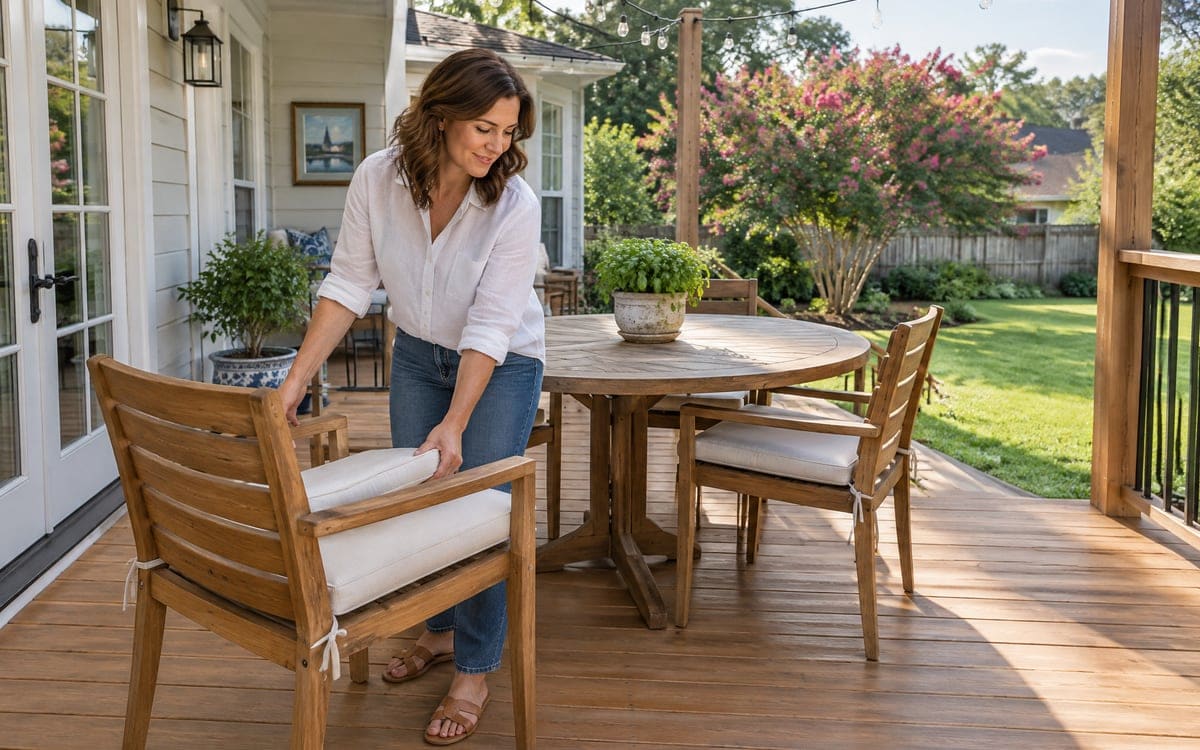
1. Furniture, grills and pots moved off the boards
Before anything is sprayed, we move chairs, cushions, side tables, the grill, pots and anything else sitting on the deck. If something is too heavy to move easily, we leave it with you and work around it. Pots against the fence get a quick watering.
2. The boards, rails and gaps looked over
We walk the deck with you and point out any loose boards, popped nails, splinters, soft spots at the ends and gaps that are wider than the rest. A soft spot or a split board is a repair question, not a wash one; we point out at the walk which parts we would rather not run water over before someone with a saw takes a look.
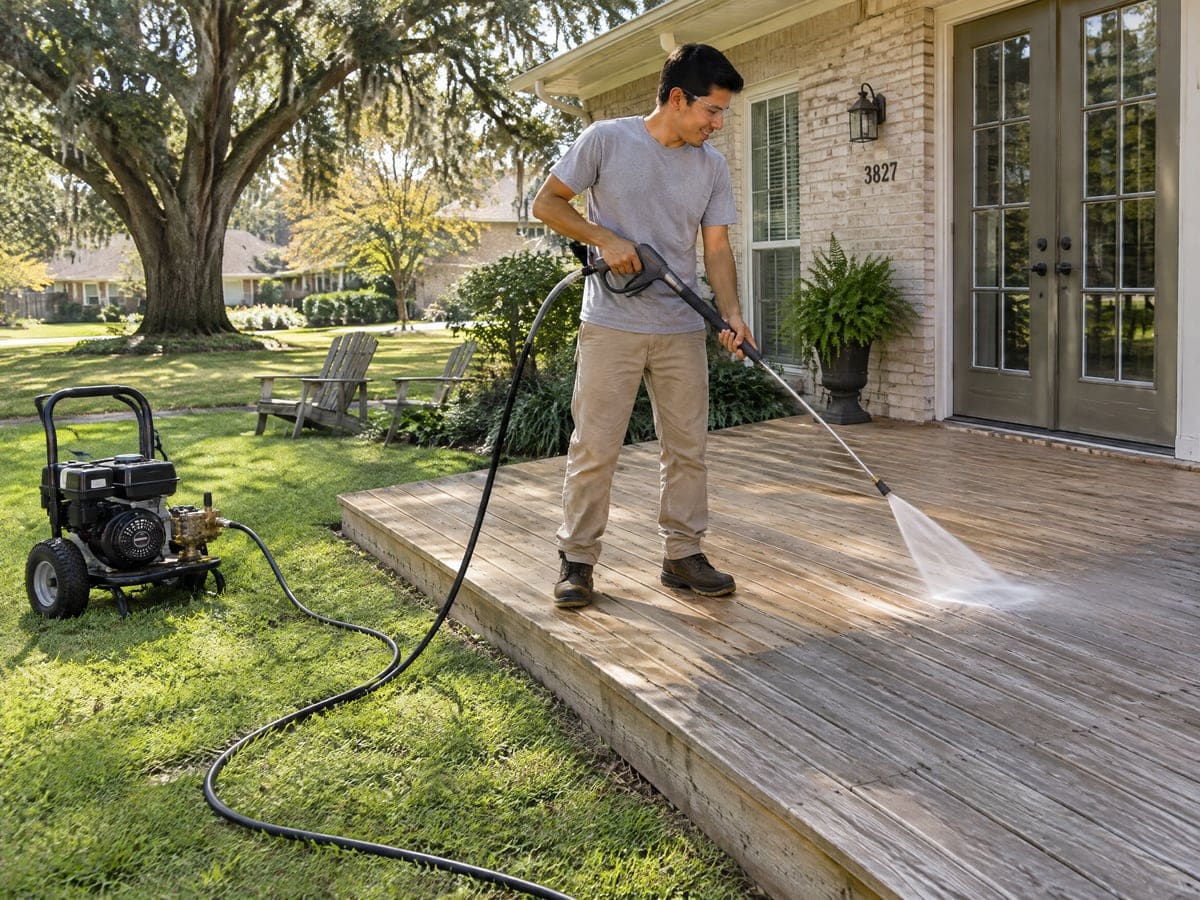
3. The boards washed along the grain
The wash runs the length of the board, with the grain, not across it. The pressure stays matched to the wood: a sun-bleached pine board is softer than a hardwood tread, and the pass is adjusted to each. If a board starts to fuzz, we back off.
4. Railings, steps and lattice
Railings get the top, the balusters, the under-rail and the hand grip. Steps get the tread and the riser. Lattice around the deck's base is washed from the yard side so the brace behind it does not catch too much water. Deck lights and anything plugged in are covered and avoided.
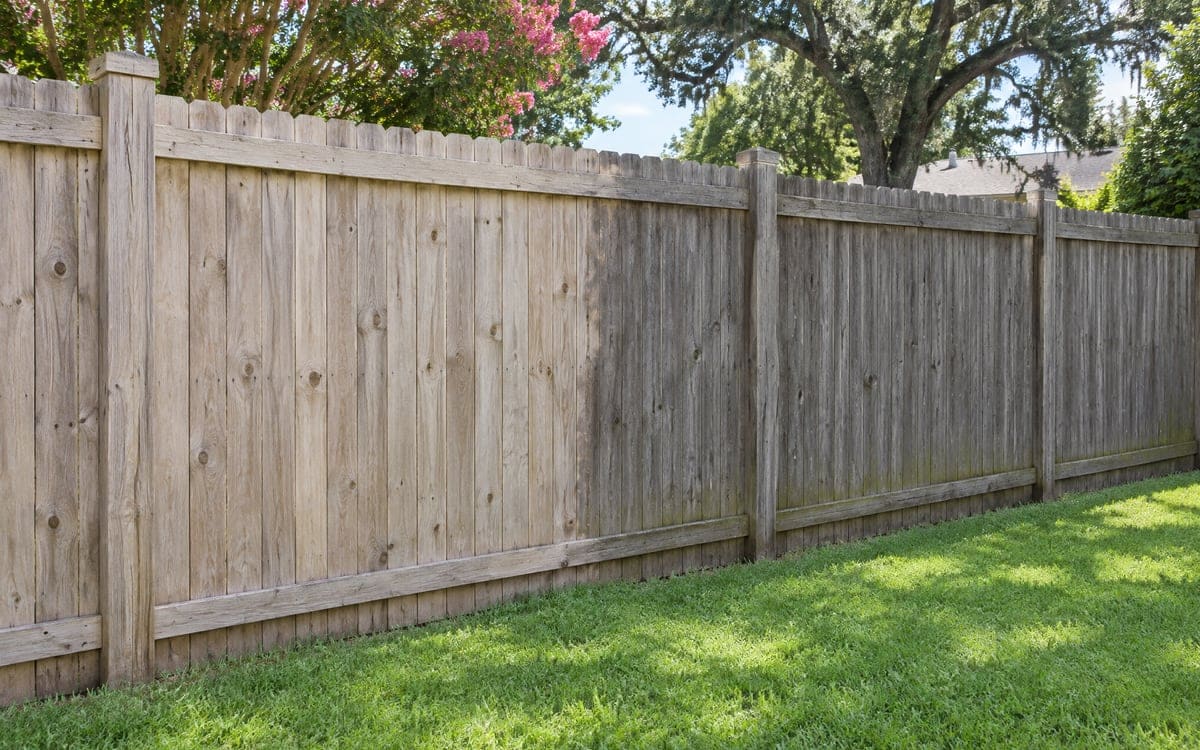
5. Fence pickets, posts and rails
The fence gets the pickets, the top rail, the lower rail and the posts, on both sides where we can reach from your yard. The side on your neighbor's property stays on their property. If the fence has lichen, which looks like a pale crust on the top of the posts and the rails, the wash goes gentle around it.
6. A rinse and a look at the lawn and beds
After the wash we rinse the deck down with clean water, so no cleaner sits on the boards. We walk the deck with you one more time. A board that is still off gets another pass, within reason; deep gray on wood that has not been stained for years will not go all the way back, and we say so at the end rather than keeping the hose on.
| Material | What builds up | How it gets washed |
|---|---|---|
| Pine deck boards | Pollen, mildew, silvering under UV | A gentle pass along the grain |
| Older gray boards | Deep gray, mildew, a soft top layer | A lighter pass; some gray will stay |
| Composite boards | Pollen, mildew in shaded corners | Low pressure, cleaner does the lifting |
| Wood privacy fence | Green film on the shaded side, pale crusts | A soft pass; backed off at lichen |
| Vinyl fence | Pollen, mildew, a dingy film | Low pressure, cleaner-driven |
| Lattice | Dust, cobweb, mildew in the gaps | A gentle rinse from the yard side |
For the patio under the deck or the walks beside it, the patio below the deck is a separate approach. The siding behind the fence, if that is on the list, goes with the back of the house.
Where deck cleaning fits
When a wash is the right step
- A deck that has gone silver, with no plans to stain yet
- A deck headed for a stain or a seal, which starts with clean wood
- A fence that is green on the shaded side or crusted at the top of the posts
- A back yard that needs to look right before people come over
When another trade suits better
- Loose boards, popped nails or soft spots: a carpenter
- Staining, sealing or painting the boards after the wash: another trade
- The whole exterior of the house: everything we wash
Once we are at the deck with you, we can tell which column the yard sits in. A sun-bleached deck with sound wood is a wash; a deck with soft, spongy boards is a carpenter's call first. We walk it with you so there are no surprises when the water goes on. Call (225) 635-8356 and we take that walk.
What the visit covers
A deck wash covers the boards, the rails, the balusters, the steps, the lattice and the fence sides we can reach from your yard. We go over which lights and outlets get covered, how the beds along the deck get handled and what gray we think the wash will lift. For the method side, how the method changes by surface walks the comparison.