Serving Baton Rouge, Louisiana

Mon to Sat 7am to 7pm · Sun 9am to 5pm

Baton Rouge concrete cleaning

Driveway pressure washing in Baton Rouge, plus walks and patios

A gray driveway with a green shadow along the shaded edge is a familiar look after a wet month in Baton Rouge. Driveway pressure washing is the job that pulls that color back and brightens walks and patios while we are there. The method differs from the walls: concrete, sound brick and pavers take more pressure than siding does.

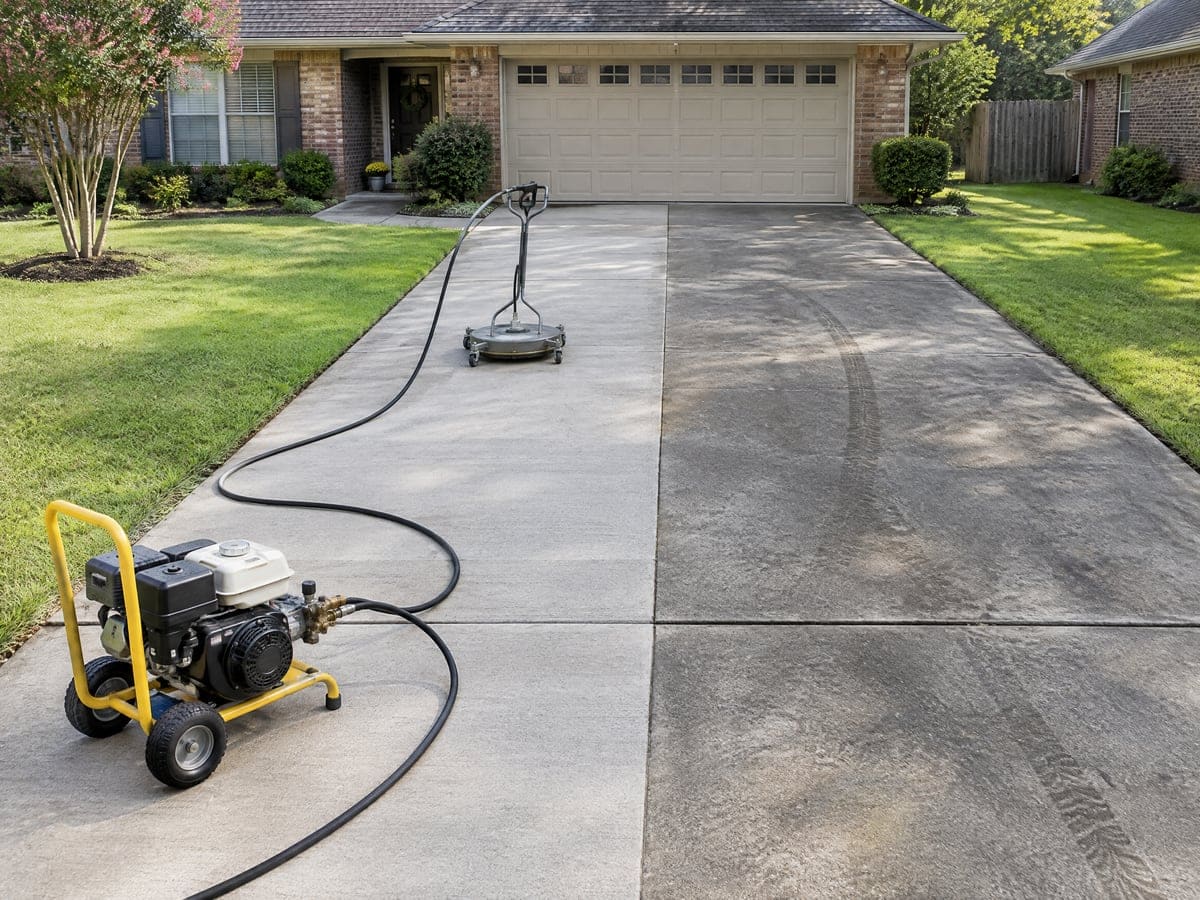
A gas washer and surface cleaner on the broom-finished concrete of a two-car Baton Rouge driveway, mid pressure washing.

How a driveway gets washed

1. Loose debris swept and picked up first

Before any water is on, the drive, the walk and the edges of the yard get swept. The City-Parish asks residents to clear debris with a broom instead of a hose,1 because storm drain water in Baton Rouge flows straight to streams, rivers and lakes2 rather than through a wastewater plant. Loose leaves, pine needles and grit come off the slab by hand before the wash runs.

2. Stains looked at: oil, rust, tire marks and green film

The drive gets looked at for the marks that stand out: oil from the car, rust from a planter, tire marks under the wheels, and green film at the shady corners. Some lift with the wash and some do not. We tell you which is which before any work starts, so there are no surprises when a stain is still there at the end.

3. The flat concrete washed

The flat concrete gets washed at the pressure that broom-finished slabs take.

4. Edges, steps, expansion joints and paver joints

The edges along the lawn, the steps up to the porch and the expansion joints that run across the slab each get a pass. On a paver drive the joints get a careful look and a lighter pass. Sand that comes up is noted so you can refill the joints.

5. Patios, pool decks and walks the same way

A back patio, a pool surround or a brick walk gets washed with the same approach. Pool equipment, the pump housing and anything plugged in get covered and avoided. On stamped concrete, the pass is softer so the texture reads the way it was poured.

6. A rinse and a last look

After the wash, the drive gets a rinse. The edges, the steps and any corner that was especially shaded get checked.
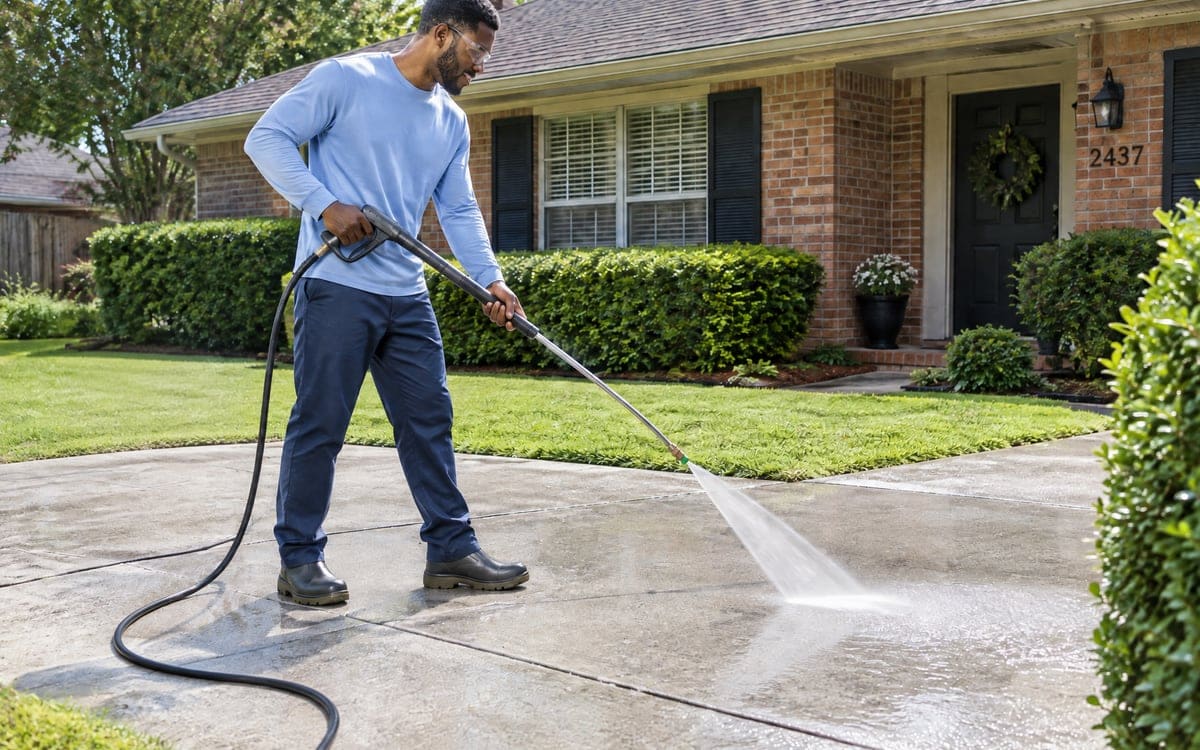
A worker guides a wand along the lawn edge of a concrete driveway, laying a wet stripe where the grass meets the slab, with a brick ranch and a door wreath behind him.
Surface What builds up What washing does
Broom-finished drive Gray film, pollen, oil, green on shaded edges Pulls the color back one pass at a time
Sidewalk Grit, tire marks, leaf stains Brightens the panels to match the drive
Brick patio Mildew in joints, pollen on the brick Cleans the brick; joints get a careful pass
Concrete pavers Green film in shade, grit on the surface Washed with care at the joints
Pool surround Pollen, leaf stains, pool-chair rust Walks the surround, pool equipment covered
Stamped concrete Dulled color, grime in the pattern Softer pass so the texture reads

For the walls above the drive we move to the house itself; for a wood deck or fence, a wood deck is covered on its own page. Siding takes the gentler method for siding.

Where driveway pressure washing fits

When a drive wash is the right job

  • Gray, blotchy or green concrete
  • A patio that bothers you before a party
  • A pool surround ahead of a swim weekend
  • A paver walk that has gone darker in the shade

When a wash is not the whole job

A pressure wash is cleaning. Repairs, slab work, color coating and sealing are their own jobs. Call (225) 635-8356 with what the drive, the walks and the patio look like.

What the visit covers

A driveway wash covers the flat concrete, the edges, expansion joints, steps, walks and the apron at the street. Patios, brick, pavers and pool surrounds can be part of the same job if you want them. We talk through what gets covered and what we are not touching before the wash starts.
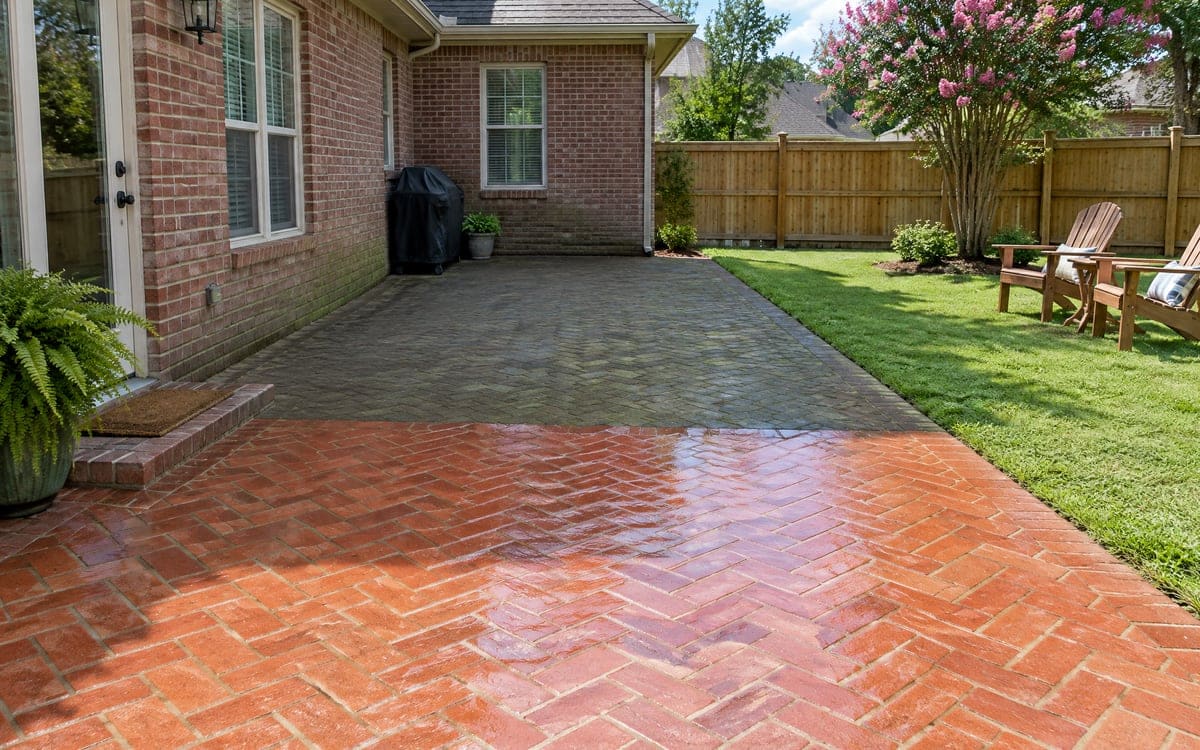
A near red-brick herringbone patio sits bright after a wash, with a gray concrete-paver patio behind it still shade-dulled, a lawn and wood fence beyond and Adirondack chairs on the grass.

When you call about the drive

  1. You tell us what the drive, the walks and the patios look like, and whether the cars can be moved.
  2. The drive gets looked at, the stains and the shaded corners noted, and the plan is set before any work starts.
  3. Nothing is sprayed until you agree to the plan.
  4. The wash happens.

Rain and oaks in Baton Rouge

June is the wettest month on average in Baton Rouge at 6.45 inches, followed by August (6.37) and January (6.36); November is the driest at 3.90 inches.3

The City-Parish asks residents to sweep driveways and sidewalks and dispose of waste2 and to clear debris with a broom instead of a hose,1 since hosing sends debris into the drain. The brochure lists soaps, household chemicals and even products advertised as "non-toxic" or "biodegradable"2 among the contaminants to keep out of storm drains. LDEQ lists oil, grease and toxic chemicals from urban runoff4 among the sources of nonpoint pollution that rain carries into Louisiana waters. Water in a Baton Rouge storm drain flows straight to streams, rivers and lakes2 rather than through a wastewater plant.

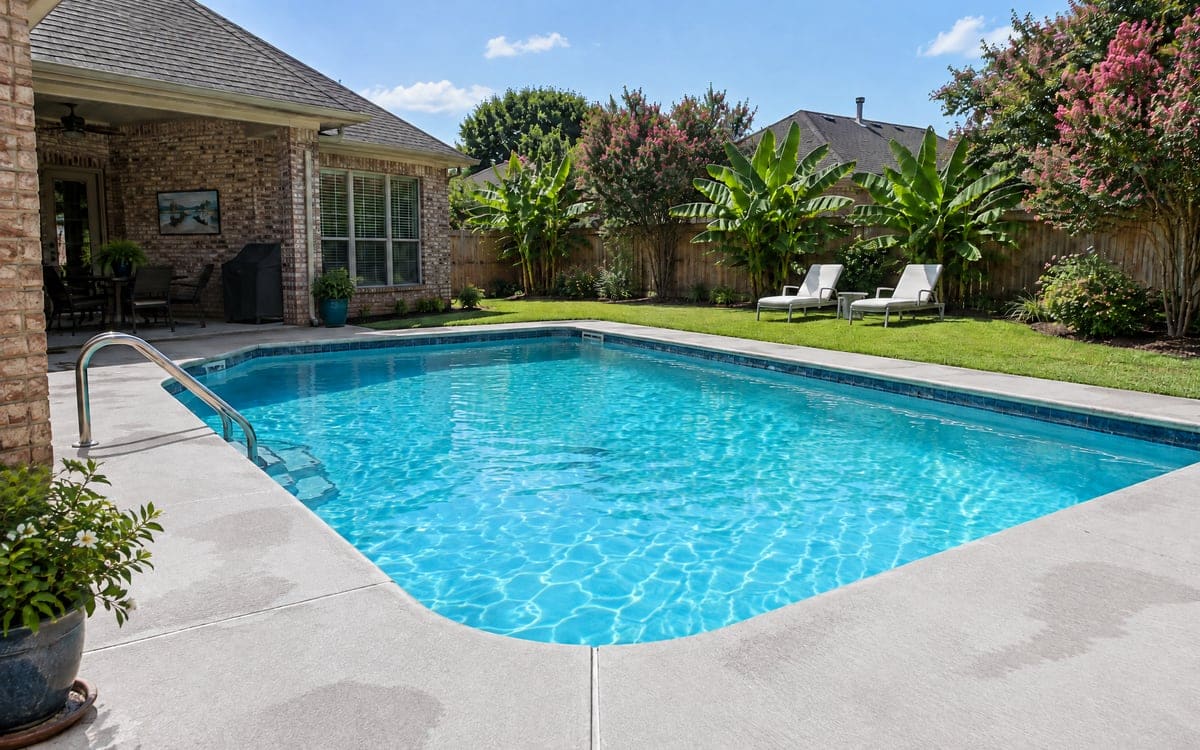
Light gray broom-finished concrete surrounds a rectangular backyard pool with a stainless ladder, with chaise lounges on the lawn and banana leaves and crape myrtles along the fence.

Driveway pressure washing in Baton Rouge: your questions

Should I pressure wash my driveway?

If the drive has gone gray or blotchy, or if green is creeping in at the shaded edges, a wash pulls it back. For a drive going on a listing photo it changes what a buyer sees first. We would not push a wash on a drive that looks fine. A fresh-looking slab under pollen is a different question from a decade of grime, and we say so when the drive gets looked at. For the plain difference between methods, why concrete takes more pressure walks through it surface by surface.

What do you spray on it first?

The method is decided at the drive, with the stains in front of us. An older oil-stained drive gets a different pass than a clean paver walk; a sun-faded slab with pollen gets lighter work than a shaded one with a green film in the corners. The specifics for your drive get talked through before the work starts.

Can you get oil, rust and tire marks out?

Some lift with the wash and some stay. Fresh oil and tire marks usually move; old, soaked oil may not. Rust from a planter or a sprinkler can come out in part or hold. We point out at the walk which marks we think will lift and which ones probably will not.

Do you clean patios, pavers and pool decks?

Yes. Pavers get a careful pass at the joints. A wood deck or fence is covered on the deck page.

Will the wash hurt the concrete or the joints?

The pressure is matched to the surface and to the mortar or sand in the joints. If sand starts coming up out of a paver joint, the crew backs off and either skips that joint or notes it so you can refill it after.

Where does the water go?

The City-Parish asks that the storm drain stay "just for rain"1 and that debris be cleared with a broom rather than a hose, since hosing sends debris into the drain. Water that enters a Baton Rouge storm drain flows straight to streams, rivers and lakes without treatment.2

Do the cars need to move?

Yes, for the wash itself. The crew will let you know when the drive is ready for the cars back on it.

A gray drive, a shaded patio and a greened-up pool surround can all be washed as one job. Pull the cars onto the street if you can, then call (225) 635-8356 and name the drive, the walks and the patio in a sentence each. Leaving your number in the callback form below the phone works as well.

Want the house and the driveway clean again?

Describe the walls, the roof and the concrete to someone who washes houses for a living.

Call (225) 635-8356

Mon to Sat 7am to 7pm · Sun 9am to 5pm

Browse all services

Rather we call you?

Leave your name and number and we will call you back.

We use your number only to call you back. Privacy policy