How a roof gets washed from the ground
1. A look from the yard
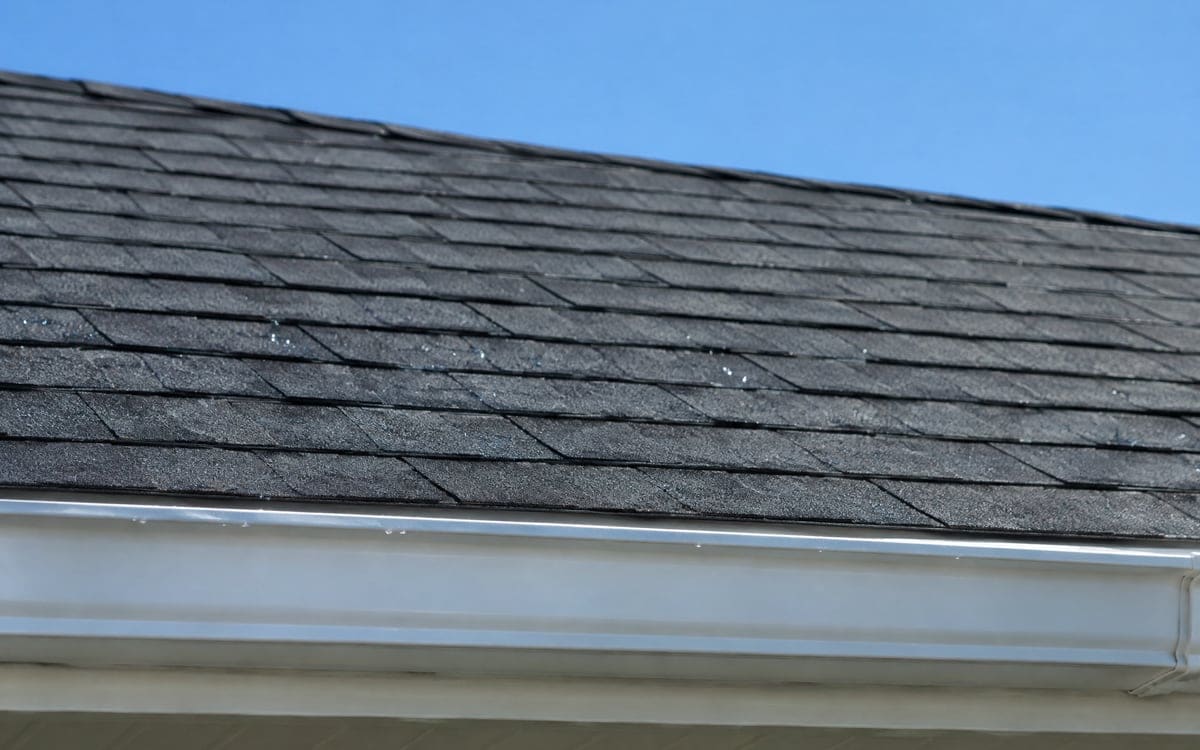
We start in the yard and take a look at the roof with you from a few angles: the dark streaks running down the shaded side, any green tufts across a plane, leaves and debris sitting in the valleys, and the streaked gutter fronts under the eaves. The shaded slopes get the longest look because they hold moisture longest and tend to carry more.
2. Plants, gutters, downspouts and the yard below handled first
Plants against the house are watered, the downspouts and the gutters are checked for standing debris, and the yard below the eaves is cleared of anything we would prefer not to walk around. Pets go inside. We talk through what we would like to cover and what we would like to leave alone, from the AC condenser near the wall to any patio set that lives under the eaves.
3. The wash from the ground, at low pressure
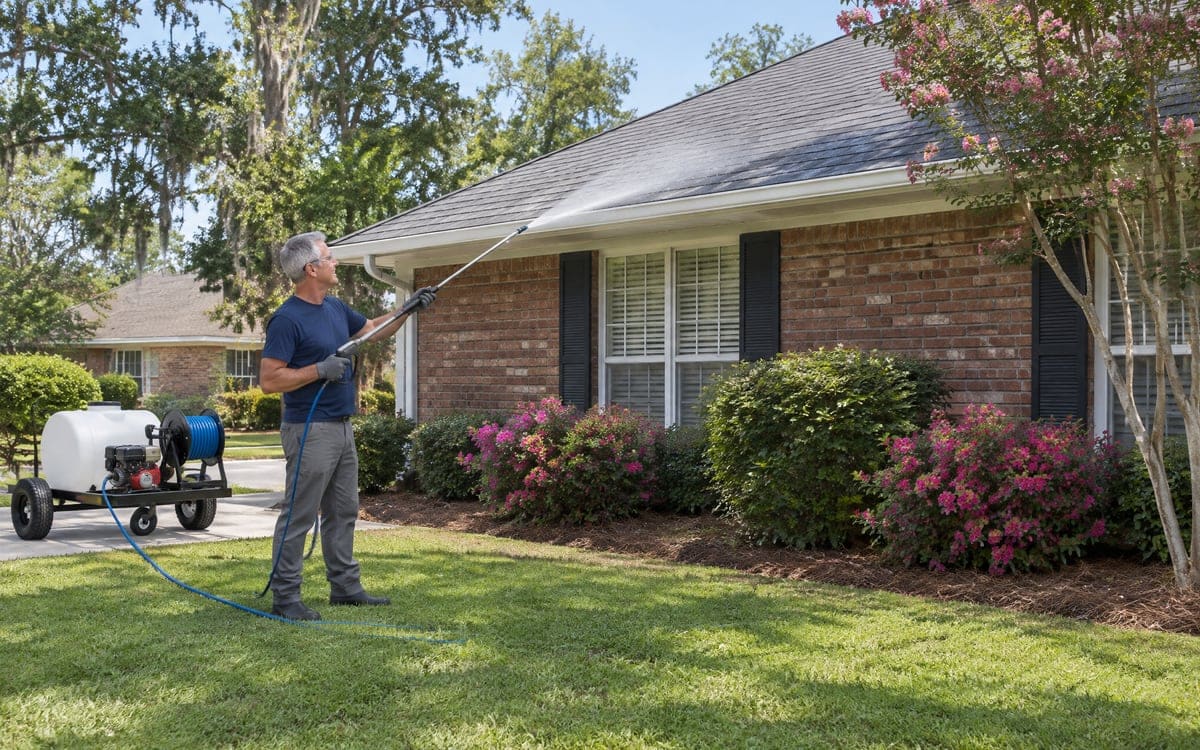
The crew stays on the lawn, with no feet going up on the shingles. The spray reaches the roof from the yard, and the pressure is kept low: the Asphalt Roofing Manufacturers Association advises rinsing thoroughly with low pressure rather than high pressure. The rinse runs down the slope and carries the lifted stain with it.
4. Gutter fronts and the walls below rinsed
With the roof washed, the fronts of the gutters and the top of the siding below the eaves get rinsed. A roof wash often streaks a wall below it if the walls are not rinsed too, so we run a pass down the top of the siding to leave the house looking even.
5. A last look from the yard
We walk around the yard with you and look at the roof from the angles that bothered you at the start. A spot that wants another pass gets one, and the ground below the eaves gets a check for anything the rinse left behind.
| What you see on the roof | What it usually is | What washing does |
|---|---|---|
| Black streaks running down from the ridge | Algae, per roofing makers | Washed off at low pressure |
| Green tufts on a shaded slope | Moss | Washed off; shingle edges checked |
| Leaves and debris in the valleys | Debris that holds moisture | Rinsed from the ground at low pressure, or pointed out as a roofer's job |
| Streaked gutter fronts under the eaves | A separate stain running down the face | Washed as part of the roof visit if asked |
For the walls below the eaves, washing the walls below is a different step. The whole exterior comes together through the rest of the house. The method side of this is covered in why roofs get low pressure.
Where roof cleaning fits
When a roof wash is the right job
- Black streaks running down from the ridge on the shaded side
- Green tufts on a slope that stays wet
- A listing photo, a party or a visit from the folks
- A side of the house that looks darker than the house next door
When another trade is the right call
- Loose, curled, cracked or missing shingles: a roofer
- A leak at a valley or around a chimney: a roofer
- Just the walls below the roof: soft washing on the siding
Once we are at the house and looking up, we can tell which it is. The streaks on an otherwise sound roof are usually a wash. A roof with lifted shingles and bare spots is a roofer's call before any water goes on it.
What to look for from the yard
Everything on this list shows from the lawn, so you can check it before you call.
Find the streaks
Roofing makers say dark streaks are usually algae, and humid climates suit it most.
Check the shaded slopes
Moss tends to grow on north-facing slopes that get less sun and stay damp longer.
Look at the gutters
Note any streaks on the outside face and any leaves piled up in the valleys.
Look next door
Spores travel on wind and animals, so streaks often show up roof after roof on a street.
Call (225) 635-8356 and we take that look with you.
What the visit covers
A roof visit covers the shingle planes we can reach from the ground, with the gutter fronts and the top of the siding rinsed on the same pass. We go over what we are not touching, the condition of the shingles as we see them from the yard, and the plan before any work starts.