A price starts with what gets washed
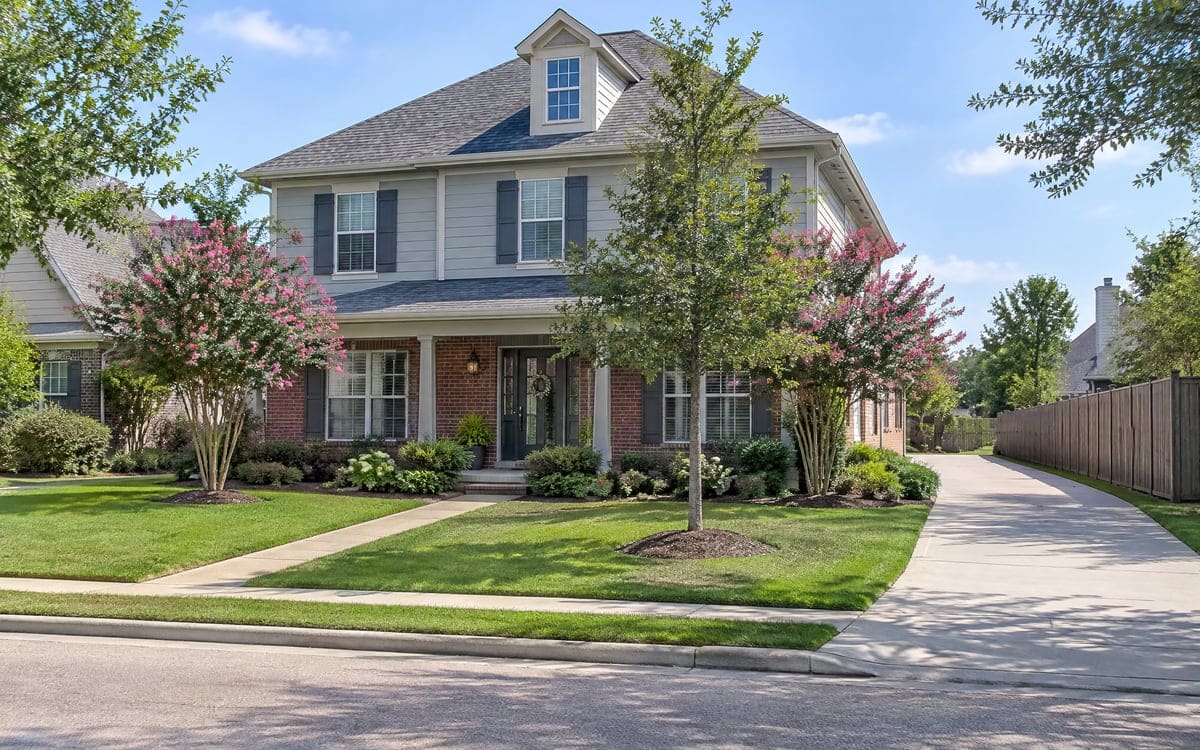
Every quote begins with one plain question: what are we washing. More surfaces mean more work. Washing the house itself is a shorter list than a house plus a roof plus a driveway plus a deck and a fence. A good first step before you call is to walk around the yard, note what looks dirty, and have that list ready.
What moves the price of a wash
Each of these changes how much work a wash takes, which is why a price comes after a look at the house.
The house
- How many stories it has and how high the walls reach.
- Vinyl, brick, stucco or painted wood, since each gets its own method.
- Stains that need extra attention.
The roof
- Priced as its own job.
- Washed from the ground, at low pressure.
Driveways, decks and fences
- How much concrete or wood there is.
- Oil, rust and green film in the shady spots.
- Whether they get washed along with the house.
The same handful of inputs comes up on every call.
| What changes the price | Why it matters | What to tell us when you call |
|---|---|---|
| Which surfaces are on the list | Each one takes its own method | Walls, roof, driveway, deck, fence, patio |
| Number of stories | High walls need more care to reach well | One story or two, any tall gables |
| Whether the roof is included | A roof is its own line on the quote | Yes, no, or quote it separately |
| Size of the concrete | More square footage, more passes | Rough driveway and walk dimensions |
| Kind of stains | Rust and oil take more work than a light film | What the stains look like and where they are |
| Side-yard access | A tight side makes setup harder | Gate width, any locked gates, planters along the walk |
| The outside water bib | Reach and flow decide the setup | Where the bib is and whether it works |
| Time since the last wash | A long gap means more buildup | Roughly when the house was last washed |
Height changes the work
A single-story ranch is a different job from a two-story house, because the siding above the first floor needs careful reach from the ground. A roof is further up again. Second-story walls and roofs are washed from the ground, and getting to them well takes more work than the walls under the eave.
That is also why a tall front gable or a second-story window that looks over the back yard changes a quote more than most people expect, even when the siding itself is no dirtier than the wall below the eave.
A roof is priced as its own job
The roof is almost always a separate line in a quote. A roof cleaning uses a different method than the walls below it, done from the ground at low pressure. If you want the roof included, say so when you call, so the number you get back covers the whole plan rather than the walls alone.
If you only want the walls, that is fine too. We can quote the roof later if the streaks keep catching your eye.
Siding, brick and concrete take different methods
Pressure washing is really a short word for a few different jobs, and the number reflects which one your walls, drive and patio need. Vinyl, fiber cement and painted wood siding are usually cleaned at low pressure. Brick and most pavers can take more. Driveway and walk concrete often take the most of all, especially where tires have ground in grit.
The age of a Baton Rouge house often matters as much as its size, because older paint and mortar may need a lighter touch at the wand. The median Baton Rouge home was built in 1976, and the method is set to that.
What Baton Rouge's housing looks like
Census estimates for the city of Baton Rouge, rounded.
55%
Housing units that are single-family detached houses
Some stains take longer than others
A light gray-green film on the shady side of a vinyl wall usually comes off at low pressure without much fuss. Rust lines bleeding down a brick wall, oil shadows soaked into a driveway and lichen clinging to a fence board are a different story. Those take longer to work through, and the number reflects the work.
Pollen that has caked on in the pollen weeks adds a layer of its own. So do leaf stains on concrete under the oaks and the dark haze that gathers near a garage from drips off a car. A patch of bird droppings on the back wall of a soffit is different again. None of these are a mystery to a crew. They are the pieces that decide whether a wash runs over mostly clean siding or has to work on top of a stain that has been sitting on the wall for a while.
Tell us about the stains that bother you most when you call, especially the odd ones. Where they are on the house, how dark they look from the yard, and how big a patch they cover all help us picture the job.
Water, access and the yard all matter
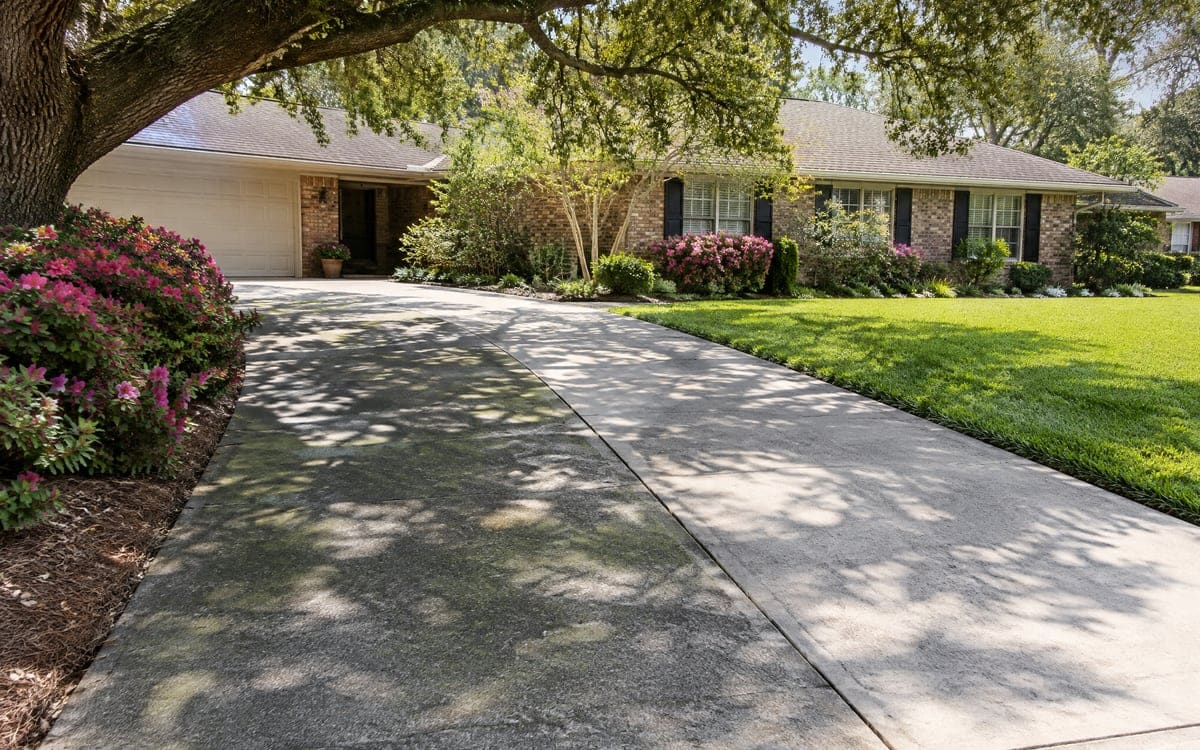
A wash runs on water. If your outside hose bib works and reaches the far corners of the house, the setup is simple. If the only working bib is on the opposite side of the house from where we start, the setup is a bigger piece of work. Side-yard access is the other quiet factor. A tight gate, a locked fence, a line of planters along the walk and overhanging branches at head height all add to what a crew does on the way to the wash itself.
None of that changes what the wash does. It changes what it takes to get to it, and that effort shows up in the number. If the bib has a slow drip or the handle snapped off recently, mention it when you call, so we can plan for it instead of discovering it in your yard.
Washing several surfaces together changes the math
Listing every surface on the first call lets one price cover the whole job. If you have been thinking about handling the house, the driveway and a deck or fence at the same time, mention the whole list on the first call. We would rather give you one number for everything than quote the house and have you call back later for the drive.
That also helps a crew plan the method for each surface in the right order. The walls, the drive, the back patio and the deck all take their own method and often their own setup, so putting them on one sheet means the plan reads cleanly from the yard rather than from a stack of separate quotes.
Why two quotes for the same Baton Rouge house can differ
Two quotes on the same house can land far apart because they are not covering the same job. One company may be quoting a wash of the siding only; another may be quoting the siding, the soffits and the back patio. One may use the low-pressure method on the walls; another may be using more pressure than the surface needs. When you compare numbers, compare the surfaces and the method side by side. Which method each surface gets is the piece of a quote that often explains the gap. If a sheet does not say which, ask.
A quote without a surface list is hard to use for comparison, because there is nothing to line it up against. Ask any company for the list to be written out before the day of the wash, so what the quote covers and what the crew intends to clean match on paper.
What to have ready when you call
A price fits better when you can describe the surfaces, the size and the yard. Rough measurements of the driveway and walks help. The address, the kind of siding you have if you know it, where the water bib is, and anything a crew should know about the yard (pets, a koi pond, a fresh garden bed) are useful on the first call. If you plan to be out, mention that too, so we can plan around the visit instead of counting on a knock at the door.