Baton Rouge house washing

House washing in Baton Rouge for siding, brick and trim

From the street the house looks fine, and then you walk down the shady side and the bottom of the siding has gone soft green. House washing in Baton Rouge is the job that lifts that film, along with pollen, cobwebs and the gray grime that creeps up from the yard. Our crew works wall by wall, with the pressure matched to each surface.

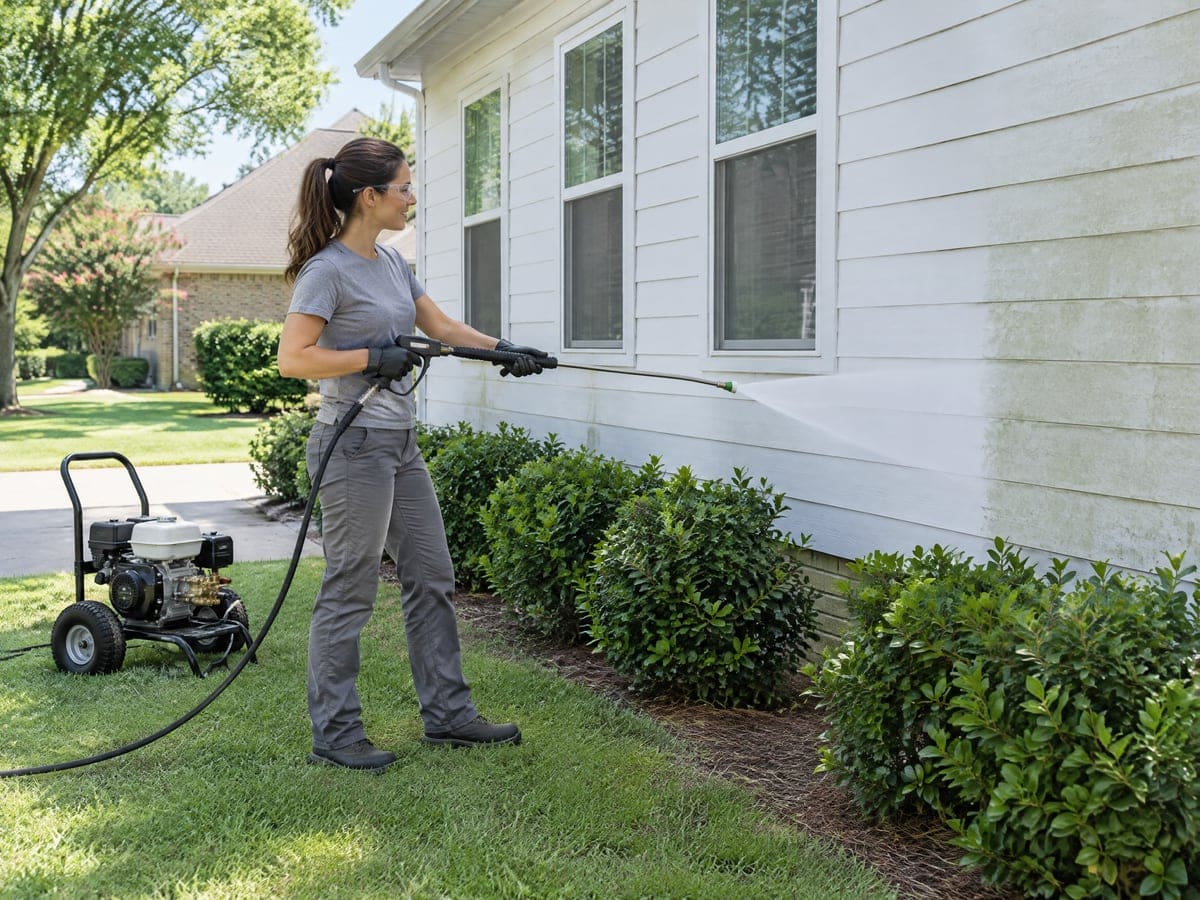
A woman in safety glasses rinses the middle courses of a white lap-siding wall on a house washing visit, the clean stripe cutting through a shaded green film, with the gas machine on the lawn behind her.

How a house gets washed, wall by wall

1. A walk around the house first

We start at the front door and walk the perimeter with you, looking at the siding, the paint, the windows and the beds below the walls. Outlets, light fixtures, meters, the panel, the AC condenser and anything plugged in outdoors get noted at the walk. Before any water flows, we know where those are and what the crew will cover.

2. Loose dirt, pollen and cobwebs come off the walls

A gentle rinse clears pollen, dust and cobweb from the siding and the eaves before any cleaner touches the wall. That first pass alone brightens the house. It also tells us how the water drains, where it pools against trim, and whether a window seal is holding up.

3. Each surface gets the method that suits it

Vinyl, fiber cement, painted wood and stucco want a lighter touch, closer to the low-pressure soft wash than a hard spray. Brick is read by its mortar: tight sound joints take more pressure, soft or sandy joints get the soft side.

4. Trim, soffits and porch ceilings

Trim boards, fascia, the underside of the eaves and the porch ceiling each get a pass. These parts go dark first on a shaded side, and the porch ceiling gets its own treatment. The crew keeps the pressure low on painted trim so the dirt comes off and the paint stays on.

5. Gutter fronts, if you want them brightened

The outside face of the gutter often runs a dark streak that a top-to-bottom rinse does not fully clear.

Gutter brightening and gutter cleaning are two jobs

A house wash can include the outside face of the gutters. What sits inside them is work for another trade.

Gutter brightening

  • Washing the outside face of the gutter, where the dark streaks run down.
  • Part of a house wash when you ask for it.

Gutter cleaning

  • Scooping leaves and debris out of the inside of the gutter.
  • Done by another trade, not as part of a wash.

Gutter brightening is a stronger pass on that face, usually with a cleaner laid on first. The inside of the gutter, where leaves and grit sit, is a different trade from a house wash.

6. A rinse from top to bottom, and a last look

After every wall is washed, the whole house gets a top-to-bottom rinse so no cleaner sits on the paint or stucco. Then we walk the perimeter with you one more time. Windows, doors, the beds and the strip of grass at the base of the wall get checked. If something is still off, that is what the last pass is for.

Surface What builds up How it gets washed
Vinyl siding Pollen, cobwebs, the green film on the shady side Low pressure, closer to a soft wash
Fiber cement Soot, airborne grit, a mildew-looking film Low pressure, light cleaner
Painted wood Dust, pollen, mildew on north walls Low pressure on sound paint; peeling or chalky spots left for a painter
Stucco Pollen, grime at downspouts, green film in shade Low pressure, no scrubbing
Brick, sound mortar Grime, pollen, mildew in shade Moderate pressure, held off the joints
Brick, soft or sandy mortar The same film, but loose joints A softer wash, nothing driven at the joints
Trim and soffits Dingy film, porch-ceiling discoloration Same method as the wall below it
Gutter fronts Dark streaks running down the face A separate brightening step

The house wash takes the walls and the parts under the eaves. For streaked shingles above the gutters we move to the roof above it, and the concrete at the front steps goes with the driveway and walks.

Where house washing fits

When a house wash is the job

  • Walls look dingy from the street, or green on the shady side
  • Trim and soffits have gone dark
  • A listing photo or a party is coming up
  • You cannot remember the last wash

When another service is the right call

  • Dark streaks on the roof point to roof cleaning done from the ground
  • Gray or blotchy concrete goes to the driveway page
  • Wood boards on the deck out back are their own job
  • Peeling or chalky paint is a painter's work before any wash

Once we are at the house with you, we can see which column it falls in. Call (225) 635-8356 and we take a look with you before anything is quoted.

What the visit covers

A house wash covers the exterior walls, the trim, the soffits, the fascia and the porch ceiling. If you ask, the gutter fronts come along as a brightening step. What you move or cover for us, like patio cushions or a grill, we talk through before the water is on. The method, the surfaces and the parts we are not touching get laid out before any work starts.
When you call about a wash

  1. You call and tell us what the house looks like, what it is made of, how many stories, where plants and pets are, and where the outside spigot is.
  2. We come look at the house with you, note the surfaces, and pull a small sample on an out-of-the-way spot if a wall deserves one.
  3. You get a price and decide. No water flows before that.
  4. The wash happens, and then we walk the house with you one more time.

Humid air and 1970s houses in Baton Rouge

Baton Rouge is a wet, warm town. The airport gauge averages 61.94 inches of rain a year, and relative humidity sits around 89 percent in the morning, with August mornings averaging 93 percent. Mold and mildew grow in warm, damp, humid conditions, and the shady side of a Baton Rouge house meets that condition for much of the year.

The city's houses have stood through decades of that weather. The median Baton Rouge home was built in 1976, and about 58 percent of its housing units were built before 1980. Older houses carry older paint, brick with mortar that is sometimes soft, and trim that has been through its share of summers. On a wall like that, a wash is a question of touch, which is why the pressure is matched to the surface rather than carried over from a driveway.

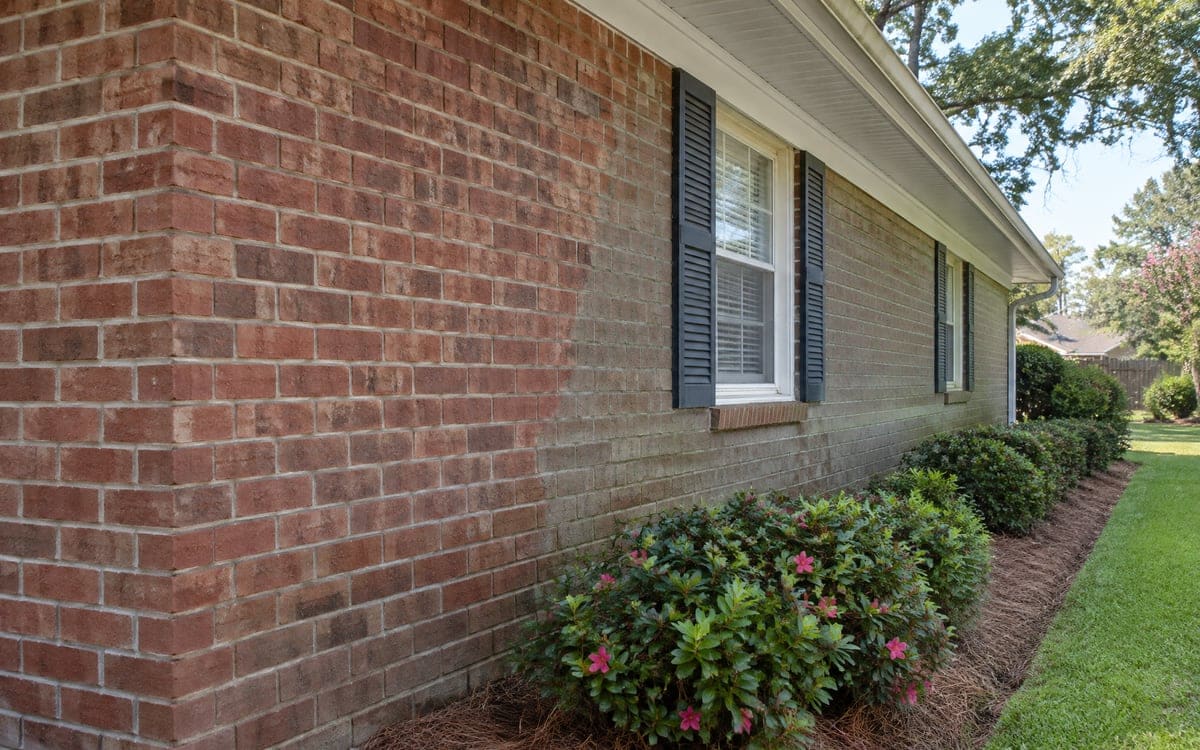
A red brick ranch's side wall carries a soft gray-green haze on the lower bricks, above a row of trimmed azaleas and a pine-straw bed.

House washing in Baton Rouge: your questions

Is there a difference between house washing and pressure washing a house?

House washing is the whole-house job: siding, trim, soffits and fascia, cleaned at the pressure each one wants. On a vinyl or stucco wall that is usually a lower pressure, closer to the low-pressure method; on tight brick it is more. Plain pressure washing is a broader word that covers concrete and other hard surfaces too, where more pressure is often the right call. If you want it surface by surface, which method each wall gets walks through the whole house.

Will it damage my siding, brick or paint?

The method is picked for each surface, which is why the walk comes before the wash. Vinyl, fiber cement, painted wood and stucco get a lighter touch; brick with sound mortar can take more. If part of the wall calls for repair before a wash, we tell you at the walk and stay off that spot.

What is the green or black film on my siding?

The film is usually mold and mildew, which grows in warm, damp air. The shady side of a Baton Rouge house stays damp much of the year, and the film shows up there first. The wash lifts the film off the wall; what returns and when depends on the shade, the trees above the house and the moisture against that wall.

Do you wash the gutters and soffits?

Soffits and the outside of the gutter are part of a house wash. The outside face of the gutter can be brightened as its own step. The inside of the gutter, where leaves sit and water needs to flow, is a different trade and not part of a house wash.

What should I move or cover first?

Patio cushions, grills, outdoor rugs and anything light enough to blow are easier if they are moved before we start. Open windows and screens get closed, and plants against the walls get a quick watering. We talk through which beds and pots we would like a bit of room around when we walk the house together.

Is my house too old to wash?

Most older houses can be washed. What tells us how is the shape of the paint and the mortar. Flaking or chalky paint goes to a painter first, and we point that out at the walk. If you have a sense of when the house was last painted, that is useful. See also how often a house needs washing.

Do I need to be home?

A short walk with the crew at the start and again at the end is useful. Try to be around at those two moments. The rest can go on with you inside or at work, if plants and pets have been handled.

A green wall and a dingy porch ceiling look worse together than either alone, and both can be part of the same house wash. The piece of a quote that tends to matter most is what drives the cost once the surfaces are listed. Call (225) 635-8356 and tell us the sides that bother you most, the stories, the surfaces and whether plants sit against the walls. If a call is not easy, the short form below the number sends your details our way instead.

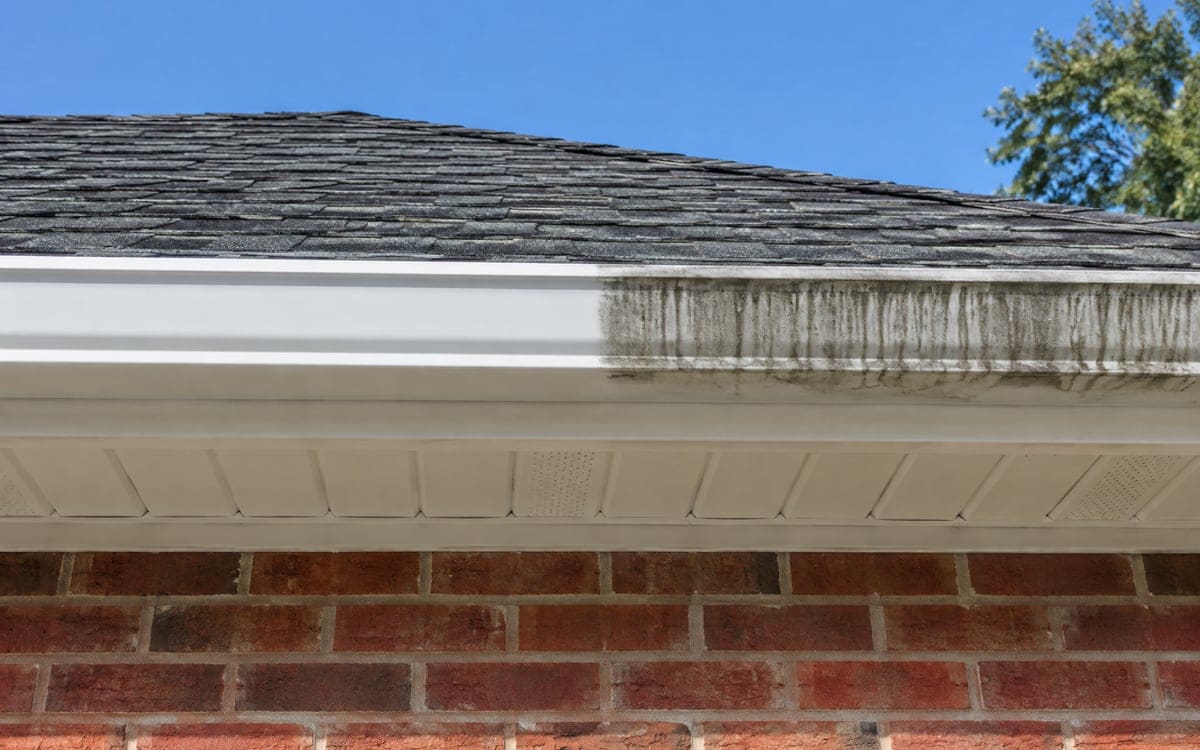
A low look up at a white aluminum gutter on a brick house, half of the gutter face already bright white and the rest still streaked with gray-black grime against the blue sky.

Want the house and the driveway clean again?

Describe the walls, the roof and the concrete to someone who washes houses for a living.

Call (225) 635-8356 Browse all services

Rather we call you?

Leave your name and number and we will call you back.

We use your number only to call you back. Privacy policy