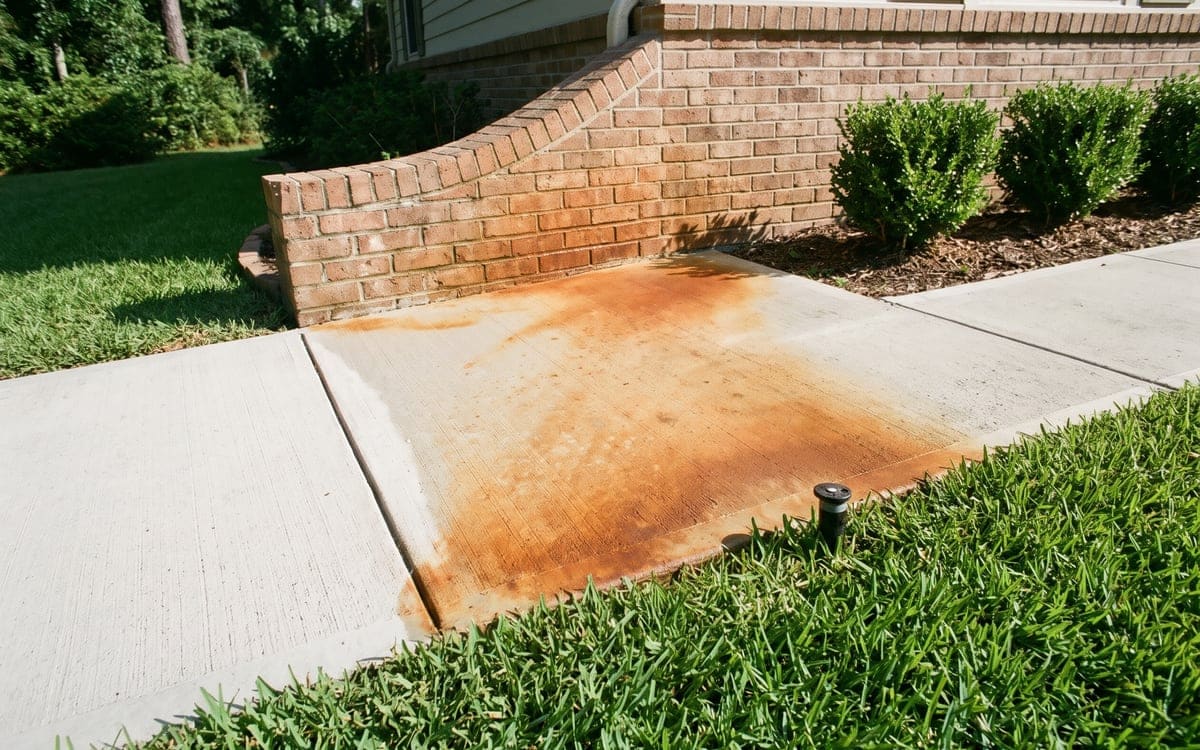
Sprinkler rust leaves a fan-shaped mark
A brown stain spreading out from a point in a wide fan is almost always sprinkler rust. Water carries dissolved iron, and when it dries on concrete the iron stays behind in the pattern the spray drew. One sprinkler head catching the edge of the drive paints a fan every time the system runs.
Rust stain removal starts with turning off whatever is making the fan. If the sprinkler head is still refreshing the stain every morning at six, the wash is painting over wet paint. Once the fan has been given a chance to sit stable, the wash has a steady stain to work with.
Furniture, planters and tools leave rings
The other common pattern is a ring. A metal planter base, a stepladder foot or a garden fork stood up against the brick each leaves a stain in the shape of what sat there. A ring under a planter is a common one on a back patio. A long thin streak along a brick wall is often a tool stood against the wall and forgotten.
New stains caught early come up with less fuss. Older stains sitting through several summers settle deeper into the concrete.
Oil soaks in where the car parks
Oil is the other stain that comes up on the same call: the dark marks near the garage, under the driver's door of the parking spot, or in the center of the back patio where a generator sat during a storm cleanup. Oil soaks into concrete, which is what makes it stubborn.
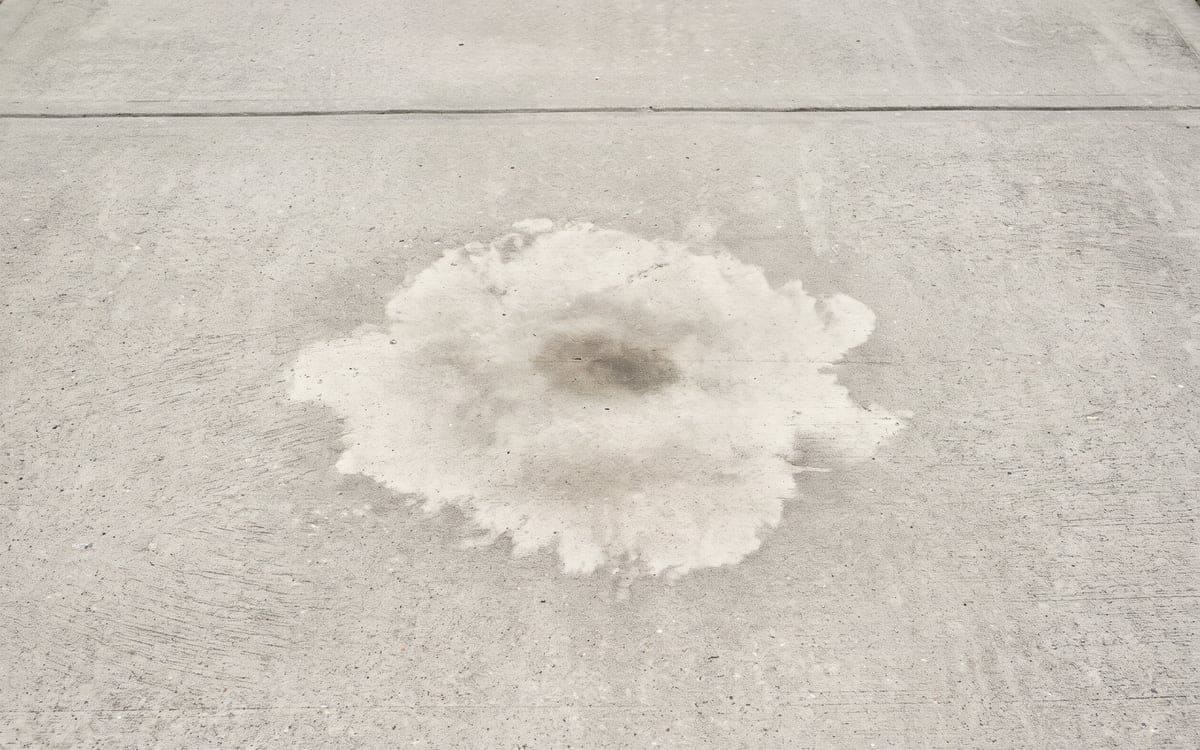
Oil stain removal typically lightens the stain rather than clearing it. A driveway pressure washing with a careful hand is the ordinary plan.
What a wash can and cannot do
A rough map of outcomes, not a promise:
| Stain | Likely outcome |
|---|---|
| Light gray-green film in shade | Usually clears |
| Fresh sprinkler rust fan | Often clears, usually lightens a lot |
| Old sprinkler fan with layers | Lightens, some shadow likely remains |
| Fresh planter or tool ring | Often clears |
| Old ring sitting through summers | Lightens, usually not fully gone |
| New oil drip caught early | Lightens a lot, sometimes clears |
| Old oil shadow under the parking spot | Lightens, usually not gone |
| Tire marks near the garage | Lightens |
| Leaf tannin outlines | Usually lift, some shadow may stay |
If a stain is beyond what a wash can lift, that is a conversation about resurfacing or a specialty concrete trade.
Oil, runoff and storm drains in Baton Rouge
Louisiana's environmental agency lists oil, grease and toxic chemicals from urban runoff among the sources of nonpoint pollution that rain carries into Louisiana waters.1 Baton Rouge storm drains flow directly to streams, rivers and lakes, as the City-Parish brochure notes.2 The city brochure lists sweeping driveways and sidewalks and removing debris and residue that could reach a storm drain2 as the right way to do it. More on the storm drain rules in Baton Rouge covers that side.
Rust on brick is its own piece
A screw head weeping for a year leaves a thin brown line down the brick below it. A metal planter against the wall leaves a ring. An old iron railing anchor can bleed into the mortar line.
Washing a brick wall lifts the film on it and may lighten a rust shadow. The mortar is the piece to watch. If a railing anchor is weeping or a flashing is leaking rust onto the brick, those are a mason's or a flashing contractor's question before the wash.
Combining rust and oil work with a bigger wash
A whole-house wash often picks up the brick, the walls, the trim and the walks. A house wash that includes the front walk and the drive catches rust and oil as part of the same sweep across the slab. A pressure wash is cleaning. If a stain is beyond what a wash can lift, repair, resurfacing and fresh sealing are their own jobs.